How to unclog a bathtub drain: A step-by-step guide for fast, safe results
Pro US Plumbers ·
In this article
- Key Takeaways
- Identify what is causing the bathtub drain blockage
- Prepare the area and gather the right tools
- Remove visible debris and clear the stopper
- Use a plunger to break up the blockage
- Clear the drain with a hand auger
- Try safer household methods and flush the pipe
- Prevent future bathtub drain clogs
- Further reading
- Conclusion
- Frequently Asked Questions
Key Takeaways
A bathtub drain usually responds best to a calm, gradual approach rather than a strong chemical treatment. Start by identifying the blockage, remove what you can see, then use a plunger or hand auger before deciding whether professional help is needed.
- Check whether hair, soap, or a deeper obstruction is slowing the drain.
- Protect the tub, gather simple tools, and use eye and hand protection.
- Clear the stopper and visible debris before plunging.
- Use a hand auger carefully when the blockage sits farther down.
- Call a licensed plumber if several drains are affected or DIY steps fail.
Identify what is causing the bathtub drain blockage
Before you try to clear the tub, watch how the water behaves. A drain that empties slowly may have a partial obstruction near the stopper, while standing water can point to a denser plug farther down. A bad smell, gurgling, or recurring backup gives you additional clues about where to begin.
Recognize common signs of a clogged drain
The clearest sign is water pooling around your feet during a shower, but you may notice trouble earlier. The drain can take longer to empty, bubble as water moves through the pipe, or release an odor from trapped organic material. If the problem appears gradually, hair and soap residue are common starting points.
Distinguish hair buildup from deeper blockages
Hair buildup often sits close to the stopper and may come out when you lift or unscrew it. If the opening looks clear but water still drains slowly, the obstruction may be beyond the trap or mixed with soap scum and mineral deposits. Try the least invasive method first so you do not push a reachable clog farther into the pipe.
Check whether the overflow opening is involved
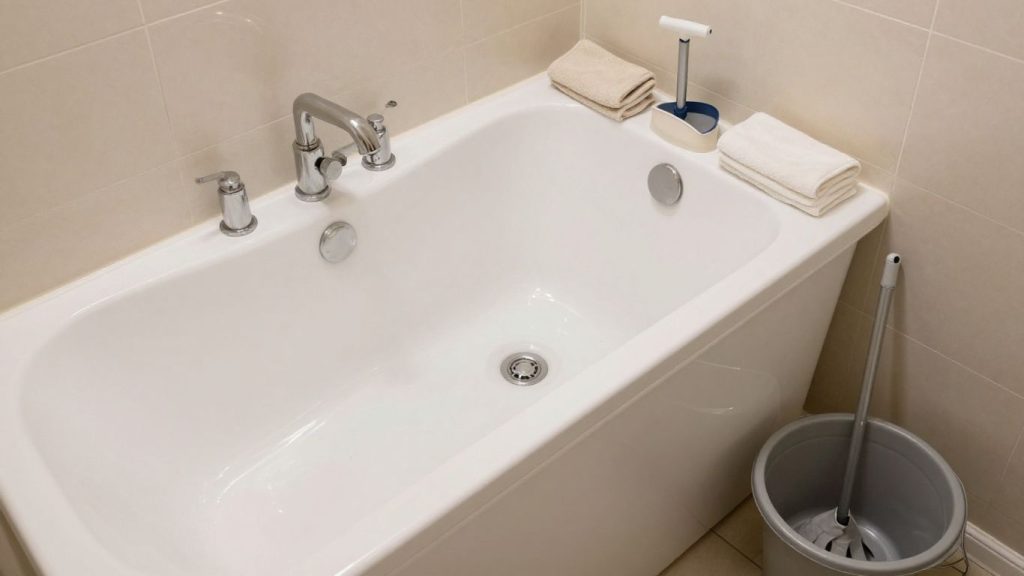
The overflow opening sits below the faucet and connects to the bathtub drain system. Air can escape through it while you plunge, weakening the pressure you need. You may also be able to reach the drain through the overflow after removing its cover, depending on the stopper design.
Know when multiple drains indicate a larger plumbing issue
If the tub is the only fixture affected, a local blockage is more likely. Slow draining in a nearby sink, toilet, or shower can suggest a shared branch-line problem, especially when several fixtures gurgle or back up together. In that situation, repeated plunging may not solve the underlying issue, and a licensed plumber should assess the line.
Prepare the area and gather the right tools
Set yourself up before opening the drain. Remove bathmats and bottles, keep towels nearby, and make sure you can work without kneeling in dirty water. A few basic tools are usually enough for a routine clog, while a deeper obstruction may call for a hand auger.
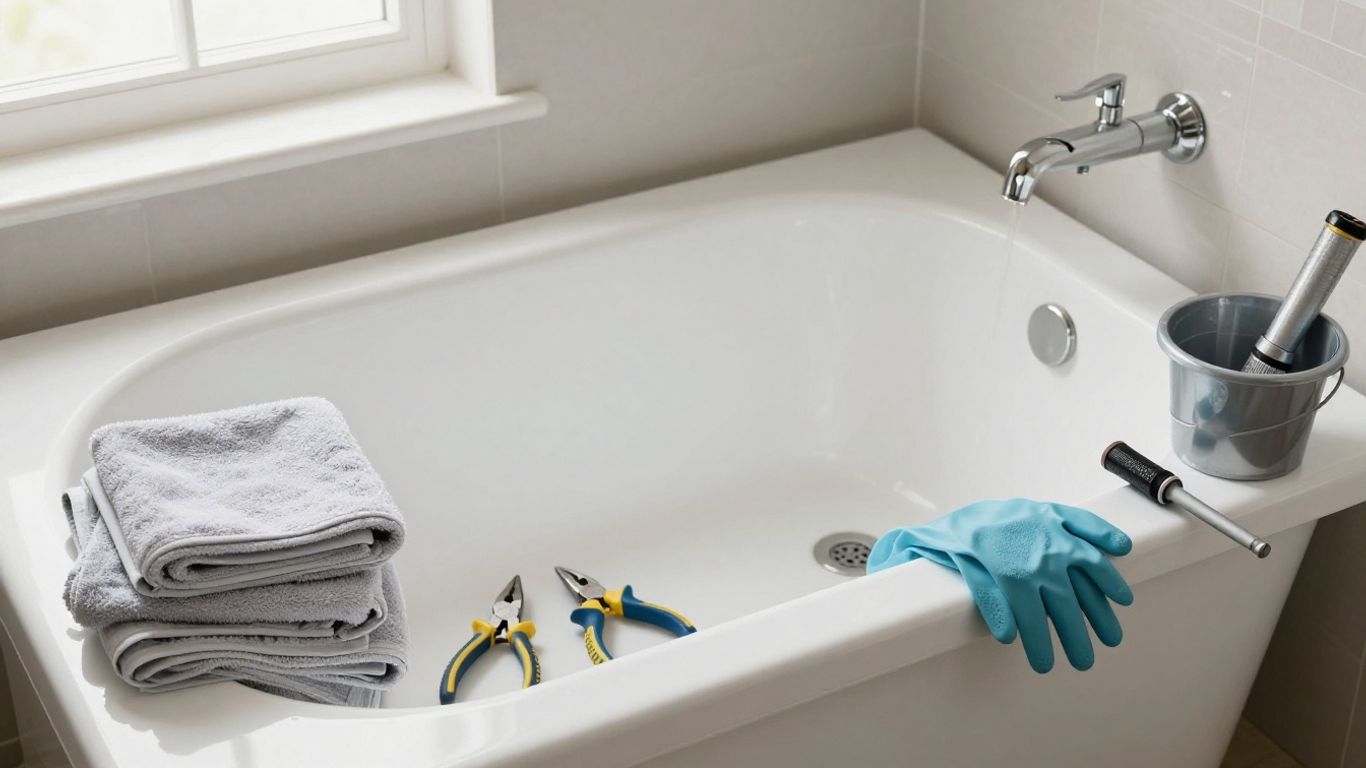
The right tool depends on what you found during inspection, so avoid reaching immediately for the strongest available product. A small choice now can prevent damage and make the next step easier.
Protect the tub from scratches and standing water
Lay a folded towel beside the tub and place removed hardware on another soft cloth. If standing water is deep, scoop some into a bucket before working so it does not splash over the rim. Avoid dragging metal tools across an enamel or acrylic surface; a plastic container and a protected work area are simple safeguards.
Choose between a plunger, drain snake, and hand tools
A cup plunger is useful for moving a soft blockage with pressure. A hand auger, sometimes called a drain snake, is better when the obstruction is farther down and does not respond to plunging. You may also need a screwdriver, adjustable pliers, a flashlight, and a small container for the stopper hardware.
Decide whether to use chemical drain cleaners
Chemical drain cleaners can be hazardous and may not remove a solid mass of hair. They can also leave caustic liquid in the tub while you are trying to remove the stopper or use an auger. For a measured, chemical-free sequence, you can review these EPA septic system care and maintenance, but do not mix products or combine a chemical cleaner with vinegar, baking soda, or another treatment.
Use gloves, eye protection, and proper ventilation
Wear waterproof gloves and eye protection whenever dirty water or a drain product could splash. Open a window or run the bathroom fan, particularly if you have already used a chemical cleaner. Wash your hands and clean the surrounding area after the blockage is removed.
Remove visible debris and clear the stopper
The stopper is often where a bathtub clog begins, so inspect it before applying pressure. Different assemblies come out in different ways, and forcing the wrong piece can damage a linkage or finish. Work slowly, keep small screws together, and take a quick photo if you are unsure how the parts fit.
Take out different types of bathtub stoppers
A lift-and-turn stopper may loosen with a counterclockwise turn, while a toe-touch style usually unscrews from the drain body. Some trip-lever assemblies are connected to a plunger inside the overflow and are removed from the overflow plate instead. If the piece resists, stop and identify its mechanism rather than applying excessive force.
Pull out hair and soap residue safely
Use gloved fingers, needle-nose pliers, or a plastic extraction tool to lift material from the opening. Pull upward and keep a bucket or lined waste container close by. Do not jab blindly, since that can compact debris or scratch the drain flange.
Clean the stopper and drain opening
Rinse the stopper with warm water and scrub away the slippery film with an old brush. Wipe the drain flange and the first visible section of the pipe, then inspect with a flashlight. A clean opening matters because it lets the plunger seal and makes it easier to tell whether the blockage is deeper.
Prevent loose debris from falling deeper into the pipe
Keep extracted hair and sludge in the waste container instead of rinsing it into a nearby sink. Cover the opening loosely with a clean cloth while you prepare the next tool, but remove the cloth before testing water flow. This small habit prevents cleared material from becoming a second obstruction.
Use a plunger to break up the blockage
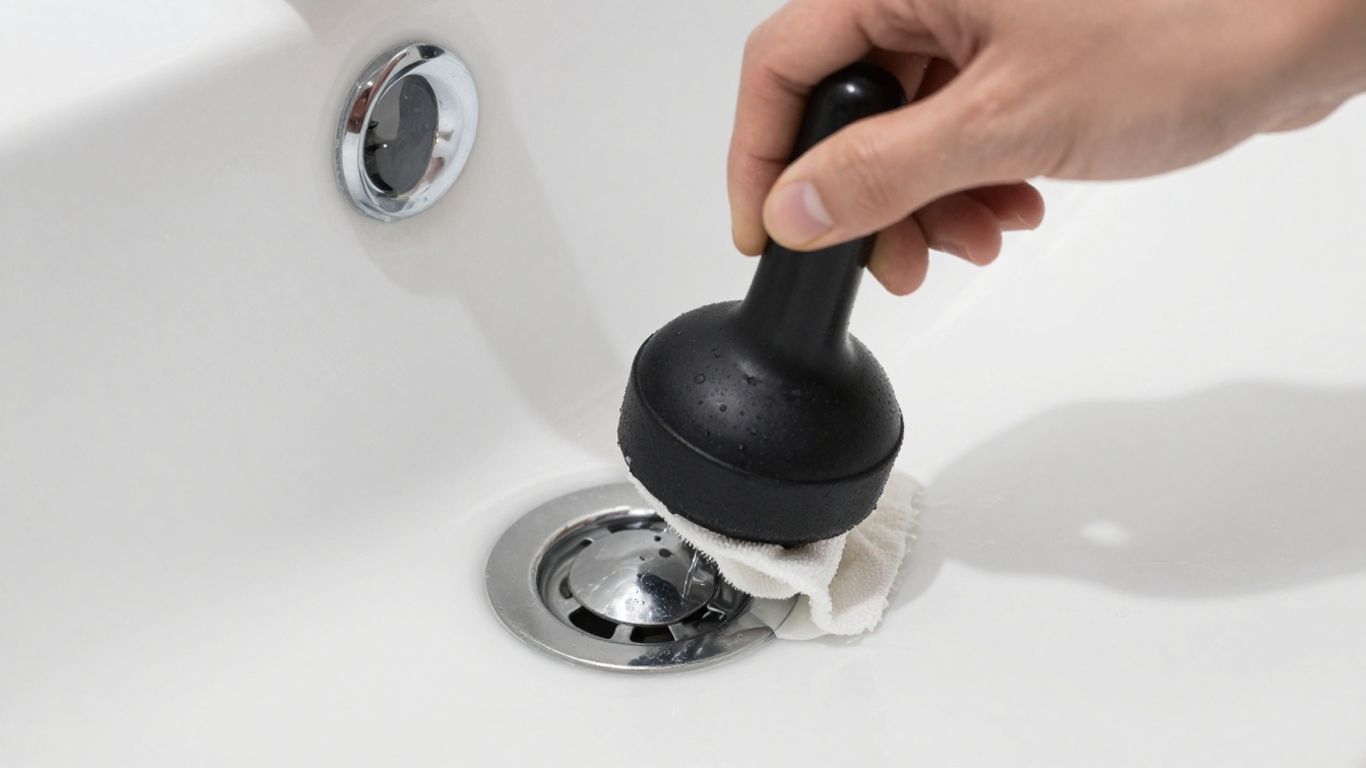
Plunging works by alternating pressure and suction at the drain opening. It is most useful after visible debris has been removed and when the tub still holds enough water to form a seal. Take your time; forceful, uneven strokes can splash dirty water without creating useful pressure.
Add enough water to create a seal
Add water until the rubber cup is covered by roughly an inch, or leave enough standing water to surround the cup. Center the plunger over the drain and press gently at first to push out trapped air. If the tub is empty, a small amount of water can make the first strokes much more effective.
Cover the overflow opening correctly
Place a damp cloth over the overflow opening and hold it firmly in place. If the overflow is not sealed, pressure may travel through that opening instead of through the blockage. Remove the stopper and use the drain opening beneath it as the plunging point.
Apply the right plunging technique
Press down slowly to create a seal, then pull up firmly without lifting the cup away. Repeat the motion for 15 to 20 seconds, pause, and check whether the water level changes. If the water begins moving, run a little more water and repeat several controlled cycles rather than pounding the drain.
Know when plunging has not worked
Stop if the water level does not change after several careful attempts, or if another fixture begins to back up. Persistent resistance suggests that the obstruction is beyond the plunger’s reach or that the line has another problem. For a visual walkthrough of the basic process, this EPA WaterSense can help you compare the setup with your own tub.
Clear the drain with a hand auger
A hand auger can reach beyond the drain opening and catch or break apart a stubborn obstruction. Choose a small manual cable intended for household drains, and feed it gently rather than forcing it. If your stopper connects to an overflow mechanism, the overflow opening may provide a straighter route.
Feed the snake through the drain or overflow opening
Remove the stopper and insert the cable into the drain, or remove the overflow plate if that route is appropriate for your assembly. Turn the handle clockwise while feeding a few inches at a time. Keep the cable low and steady so it does not scrape the visible finish.
Work the cable through the obstruction
When you feel resistance, rotate the handle while applying light forward pressure. The cable may catch hair, pass through soft buildup, or stop at a bend. Do not crank hard against immovable resistance; retract slightly, rotate again, and let the auger work gradually.
Retract the auger and remove trapped debris
Pull the cable back slowly and keep a rag around it as it emerges. Put the retrieved material directly into a lined container, then wipe and inspect the cable before another pass. Two or three gentle passes are often more useful than one aggressive attempt.
Test the drain before reinstalling the stopper
Run a small stream of warm water and watch whether it disappears without pooling. Increase the flow gradually, checking underneath the tub if an accessible service area allows it. Leave the stopper out until you are satisfied that the drain is moving water normally.
Try safer household methods and flush the pipe
Household methods are best treated as mild options for residue, not guaranteed solutions for a packed drain. They may loosen soap film or fresh, soft buildup, but they will not reliably remove every obstruction. Never combine them with commercial drain chemicals.
Use hot water for soap and grease buildup
Pour hot tap water slowly into the opening after you have removed standing water and confirmed that the tub material and drain fittings can tolerate it. Very hot water may soften some soap residue, but it should not be handled in a way that risks burns or damages a delicate surface. Follow with a short flow of warm water to see whether drainage improves.
Apply baking soda and vinegar carefully
For a mild residue problem, place some baking soda into the opening, add vinegar, and cover the drain briefly while the mixture fizzes. Then flush with warm or hot water. Keep expectations modest: the reaction may freshen the opening or loosen light residue, but it is not a substitute for mechanical removal of a dense hair clog.
Understand the limits of natural drain cleaners
Natural ingredients are not automatically harmless when mixed with other products or used in a sealed, pressurized pipe. If a chemical cleaner has already been poured in, do not add anything else; follow its label directions and avoid plunging or snaking until you understand the safety precautions. The IAPMO, which publishes the Uniform Plumbing Code offers another general reference for this limited approach.
Flush the pipe and check water flow
Once the drain begins moving, run water for several minutes and listen for gurgling. Watch the level as you increase the flow, and check that water does not return when another nearby fixture runs. If flow remains weak, move on to an auger or arrange professional service rather than repeatedly adding mixtures.
Prevent future bathtub drain clogs
A little routine maintenance can keep a small amount of hair from becoming a full blockage. Clean the drain before water slows noticeably, and pay attention to recurring odors or gurgling. Prevention is especially useful in homes with several people using the same tub every day.
Install a hair-catching drain cover
Choose a cover that fits the drain opening without preventing the stopper from operating. Empty it into the trash after each bath or shower, then rinse it separately. A cover will not catch every strand, but it reduces the amount entering the pipe.
Clean the stopper and drain regularly
Remove and rinse the stopper every few weeks, or more often when the tub is used heavily. Brush away the film around the flange and inspect the visible drain passage. Regular cleaning makes a developing problem easier to spot and less unpleasant to correct.
Avoid sending soap, hair, and bath products down the drain
Keep loose hair out of the tub and dispose of thick bath-product residue in the trash when practical. Large amounts of bath salts, oils, and fibrous materials can collect inside a drain even when the water initially appears to flow normally. Small changes in what goes down the opening can extend the time between cleanouts.
Decide when to call a licensed plumber
Call for help when several fixtures are affected, wastewater backs up, the auger cannot pass, or the clog returns quickly. Pro US Plumbers connects homeowners with independent plumbers in their area. The plumbers you hear from are independent businesses, not employees or agents of ours, so confirm each one’s license and insurance yourself before you hire. The directory is designed to help you understand the price and process before anyone shows up, which is useful when you need service quickly.
Pro US Plumbers is a referral service: it puts your request in front of independent plumbers who work nearby. Before dispatch, ask what the visit includes, whether a diagnostic or trip fee applies, and when the plumber is expected to arrive. For a planned repair, Pro US Plumbers also gives you a way to compare the process before committing to a visit.
Related articles
Plumber cost to unclog drain: What homeowners should expect to pay and Garbage disposal humming but not working: Causes, safe fixes, and when to call a plumber cover other plumbing questions you may run into.
Further reading
For more background, see the International Code Council and the FTC consumer advice. It is also worth reading the EPA Safer Choice, for lower-hazard cleaning products and the EPA guidance on household hazardous waste. You can find more detail from the InterNACHI.
If you would rather not sort this out alone, Drain cleaning and sewer services and independent local plumbers in your area can contact you directly.
Fixtures and appliance plumbing (faucets, showers, disposals) and Septic system services may also be useful before you decide.
Pricing guide: how plumbers charge and how to get a fair written quote and Request form: describe the problem so independent local plumbers can contact you may also be useful before you decide.
Where requests can be sent from: states and metros and About: how this referral service works may also be useful before you decide.
All plumbing service lines may also be useful before you decide.
Conclusion
When you are learning how to unclog a bathtub drain, begin with the visible blockage and move from gentle methods to more targeted tools. Protect the tub, work safely, and stop when the symptoms suggest a larger line problem; a licensed plumber can address the issue without leaving you to guess about the process or cost.
Frequently Asked Questions
What is the first thing to try when a bathtub drain is clogged?
Remove the stopper and pull out visible hair or soap residue with gloves or pliers. If the opening is clear, try a properly sealed cup plunger before moving to an auger.
Can boiling water unclog a bathtub drain?
Hot water may soften light soap residue, but it is not dependable for a compact hair clog. Use water carefully to avoid burns and protect tub materials that may be sensitive to extreme heat.
Should you plunge a bathtub with the stopper in place?
No. Remove the stopper so the plunger can seal directly over the drain opening. Cover the overflow opening with a damp cloth to keep pressure from escaping.
Is baking soda and vinegar safe for a bathtub drain?
It can be a mild option for light residue when no chemical cleaner has been used. Do not mix it with commercial drain products, and do not rely on it to remove a dense or deep obstruction.
How do you know whether a clog is deeper in the pipe?
A clear stopper and drain opening combined with persistent slow flow often points to a deeper blockage. Multiple affected fixtures, gurgling, or recurring backups are stronger reasons to seek professional assessment.
When should you stop trying to unclog the tub yourself?
Stop when plunging and a careful auger attempt do not improve flow, when wastewater backs up elsewhere, or when you have used a chemical product and cannot safely continue. A licensed plumber can diagnose the line without unnecessary repeated treatment.
How can you prevent bathtub drain clogs?
Use a hair-catching cover, clean the stopper regularly, and keep hair and thick bath-product residue out of the drain. Checking the flow early is easier than dealing with standing water later.