Garbage disposal humming but not working: Causes, safe fixes, and when to call a plumber
Pro US Plumbers ·
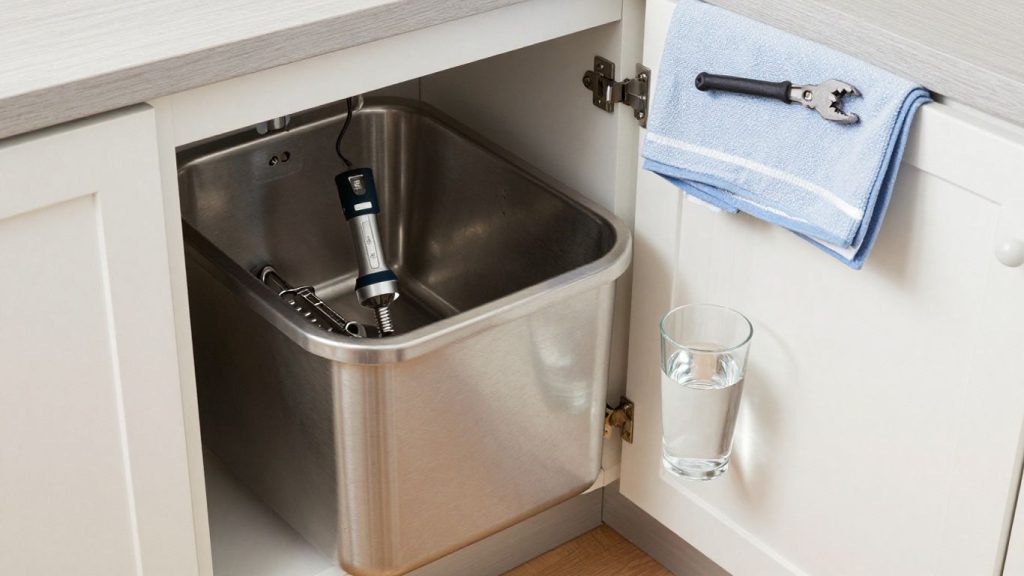
In this article
- Key Takeaways
- Understand what a humming disposal means
- Put safety first before troubleshooting
- Check for a jammed flywheel
- Reset the disposal and test the motor
- Diagnose common electrical causes
- Know when a repair is unsafe or impractical
- Prevent future humming and disposal failures
- Further reading
- Conclusion
- Frequently Asked Questions
Key Takeaways
A humming disposal usually has power but cannot turn its flywheel. Start with electrical safety, then check for a jam and use the reset only after the unit is safe to handle.
- Switch off the disposal and its circuit breaker before inspecting it.
- Never put your hand into the disposal opening, even when the power seems off.
- Use a disposal wrench or hex key to work a jammed flywheel free.
- Repeated humming, leaks, burning smells, or tripped resets call for professional help.
- Cold water, sensible loading, and routine cleaning can reduce future failures.
Understand what a humming disposal means
When a garbage disposal hums without grinding, the sound gives you a useful clue: electricity may be reaching the motor, but the moving parts are not turning normally. A jam is common, though a failed motor, worn bearing, or wiring fault can produce a similar symptom. The safest approach is to treat the hum as a warning rather than repeatedly flipping the switch.
How the motor and flywheel normally operate
Inside the disposal, an electric motor turns a flywheel fitted with impellers. Food waste is forced against the grinding components as the flywheel rotates, while water carries the ground material into the drain. Under normal conditions, you hear a steady motor sound followed by the familiar grinding action, not a fixed hum with no movement.
Why humming indicates a power or jam-related problem
A steady hum often means the motor is energized but stalled by something that prevents the flywheel from rotating. A utensil, bone fragment, fruit pit, or compacted food can wedge between the moving parts. Continuing to run the unit in that state can overheat the motor, so switch it off promptly; this EPA septic system care and maintenance covers the same basic distinction between a powered unit and one that is unable to spin.
How to distinguish a mechanical issue from an electrical fault
A hum points more toward a jam or seized internal part than a completely dead power supply, but it is not a final diagnosis. A silent disposal suggests you should check the switch, breaker, outlet, or GFCI, while a hum followed by a trip may indicate overload or an electrical problem. The sound is a clue, not a repair plan, so use it to choose a cautious next check.
Put safety first before troubleshooting
Before you inspect a disposal, remove every practical source of danger. Turn off the wall switch, disconnect power if the unit has a plug, and shut off the circuit breaker that serves it. Keep a towel nearby for water, but do not begin probing until you are certain the disposal cannot start unexpectedly.
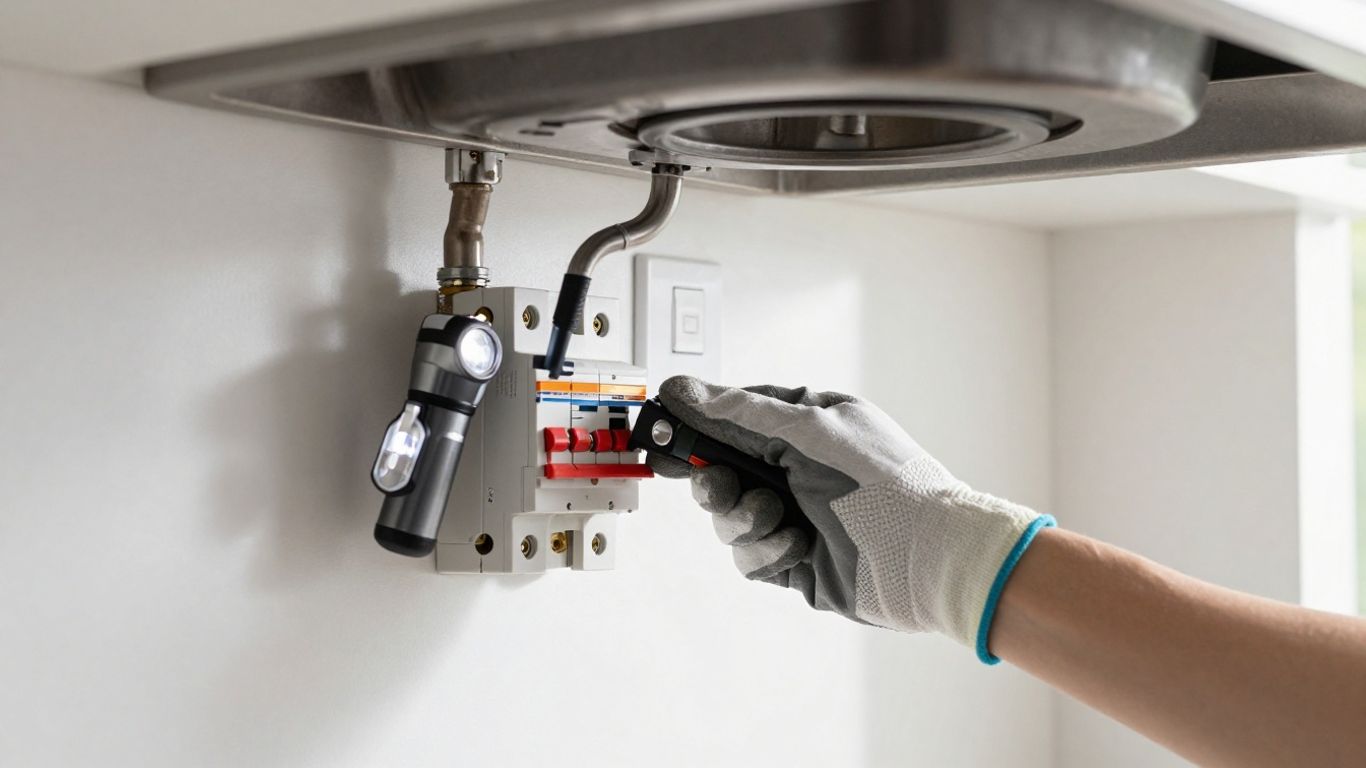
Turn off power at the switch and circuit breaker
Flip the wall switch to the off position, then locate and switch off the relevant breaker. If the disposal plugs into an outlet beneath the sink, unplug it as well. Do not rely on the wall switch alone, since someone could restore power while you are working or a faulty switch could behave unpredictably.
Keep your hands out of the disposal opening
The grinding chamber can contain sharp edges, broken glass, or a hidden object under food residue. Even after power is disconnected, avoid reaching inside because you may cut yourself or move debris into a more difficult position. If you cannot see the obstruction clearly, stop rather than exploring by touch.
Use a flashlight and tools instead of reaching inside
Shine a flashlight through the sink opening and use long pliers only for a clearly visible, loose object, with power fully disconnected. A disposal wrench or correctly sized hex key is safer for turning the flywheel from below. The IAPMO, which publishes the Uniform Plumbing Code approach is useful here because it keeps inspection focused on switches, tools, and the reset rather than hands-on searching.
Check for a jammed flywheel
With power off, a jam is the most practical problem to investigate first. Look from above for an object caught in the chamber, then check whether the flywheel can move with the proper tool from underneath. Work slowly; forcing a tool can damage the disposal or injure you if power has not been isolated.
Inspect the chamber for visible obstructions
Use a flashlight to look for silverware, small bones, fruit pits, glass, or dense scraps lodged around the impellers. Remove only an object that is plainly visible and easy to grasp with long pliers. Do not dismantle the disposal or push debris farther down the drain while trying to clear it.
Free the impellers with a disposal wrench
Insert a disposal wrench or the manufacturer-approved hex key into the socket at the bottom of the unit. Rock it back and forth instead of applying a sudden, forceful twist. As the flywheel loosens, rotate it through several positions so you can identify whether the obstruction has released; additional International Code Council explains this general tool-based method.
Remove hard objects without damaging the grinding components
If the tool frees the flywheel, remove the loose object with long-handled pliers while keeping your face and hands away from the opening. Never use a screwdriver as a lever against the impellers, strike the chamber, or pry on fixed grinding parts. If a hard object is wedged tightly, professional removal is safer than turning a small jam into a damaged housing.
Reset the disposal and test the motor
The overload protector can shut the disposal down after the motor becomes hot or works against resistance. Resetting it is useful only after you have turned off power and addressed any apparent jam. If the motor immediately hums again, stop testing instead of holding the switch down.
Locate and press the overload reset button
Find the small reset button on the underside of the disposal, usually near the bottom center or offset slightly to one side. Press it only after the unit has cooled and power is off. If it will not stay in, wait longer and recheck for a jam rather than forcing the button.
Check whether the unit trips the reset again
A reset that pops out repeatedly indicates that the motor is still overloaded or that another fault remains. It may be a stubborn obstruction, a seized bearing, or an electrical problem that should not be tested repeatedly. Write down what happened—hum, trip, leak, odor, or noise—so a plumber can diagnose the sequence more efficiently.
Test the disposal briefly after clearing the jam
Once the jam is gone, restore power and run cold water before switching the disposal on for only a few seconds. Turn it off immediately if it hums, vibrates, smells hot, or trips again. A short test is enough to confirm normal operation; there is no benefit in letting a questionable motor struggle.
Diagnose common electrical causes
Not every humming disposal has a mechanical blockage. A loose connection, failed switch, tripped GFCI, or damaged motor can interrupt normal operation even when the symptoms seem similar. Limit your checks to accessible controls and reset devices; electrical work inside a box or appliance belongs to a qualified professional.
Confirm the wall switch and circuit breaker work
Try the wall switch only after the disposal is reassembled and safe to test. Check whether the breaker has moved to a middle or off position, then reset it once if there are no signs of burning, moisture, or repeated tripping. If other appliances on the same circuit are also dead, the issue may be upstream of the disposal.
Check for a tripped GFCI outlet
Some disposals are connected through a GFCI receptacle beneath the sink or nearby on the counter. Press its reset button and see whether power returns, but do not keep resetting it if it trips immediately. Moisture, a damaged cord, or a wiring fault can make repeated resets unsafe.
Recognize signs of a failed motor or wiring problem
The disposal deserves professional diagnosis when it hums after the flywheel is free, smells burned, vibrates unusually, or trips the breaker or reset repeatedly. These symptoms can indicate motor wear, a seized bearing, or wiring trouble rather than a simple food blockage. The pattern below can help you decide how urgently to stop troubleshooting.
| Symptom | More likely concern | Sensible next step |
|---|---|---|
| Hums and flywheel will not move | Mechanical jam | Shut off power and use the proper wrench |
| Silent after the switch is pressed | Switch, breaker, outlet, or GFCI | Check accessible controls once |
| Hums after a clear flywheel | Motor or bearing fault | Stop testing and arrange service |
| Burning smell or repeated trips | Electrical or motor damage | Leave power off and call a professional |
This table is only a screening guide, not a substitute for testing. When the symptom points beyond a visible jam, keeping the circuit off protects the disposal and reduces the risk of an electrical injury.
Know when a repair is unsafe or impractical
A minor obstruction can sometimes be cleared safely, but not every humming disposal is a do-it-yourself repair. Water and electricity are close together beneath the sink, and a damaged appliance can worsen quickly. If you are unsure whether power is isolated, stop and arrange help rather than guessing.
Identify leaks, burning smells, and unusual noises
A leak from the sink flange, drain connection, dishwasher inlet, or disposal body changes the problem from a simple humming motor to a possible water-damage issue. Burning insulation, smoke, grinding metal, severe vibration, or a sharp electrical odor are also stop signs. Shut off power and, if necessary, the water source before calling for service.
Decide when professional electrical help is necessary
Call a licensed professional if the breaker trips again, the GFCI will not hold, wiring looks damaged, or the motor hums after the jam is removed. Pro US Plumbers connects homeowners with independent plumbers in their area. The plumbers you hear from are independent businesses, not employees or agents of ours, so confirm each one’s license and insurance yourself before you hire. Give the technician the symptom history and tell them what you already tried.
Compare repair costs with replacing an older disposal
A repair may make sense when the unit is relatively new and the fault is limited to a replaceable component. Replacement is often more practical when the housing leaks, the motor is badly worn, or several parts have failed. Pro US Plumbers is a referral service: it puts your request in front of independent plumbers who work nearby.
Prevent future humming and disposal failures
Good disposal habits reduce both jams and unnecessary motor strain. You do not need elaborate maintenance, but you do need to control what enters the chamber and how much work the motor does at once. A few consistent routines also make unusual sounds easier to notice early.
Use cold water and avoid overloading the chamber
Run a strong stream of cold water before, during, and briefly after using the disposal. Add scraps gradually instead of packing the chamber full, and give the motor time to process each load. Cold water helps keep grease more solid as it travels away, while overloading can slow the flywheel and encourage a jam.
Keep grease, fibrous foods, and hard objects out
Grease can collect in drain lines, fibrous peels can wrap around moving parts, and hard items can chip or lock the grinding components. Keep these materials out of the disposal:
- Cooking grease, oils, and fatty drippings.
- Bones, fruit pits, shells, and metal objects.
- Stringy vegetable fibers, corn husks, and tough peels.
- Glass, plastic, rubber, and other non-food material.
Choosing what goes into the sink is more effective than trying to compensate with extra water later. If an item is hard, stringy, or greasy, place it in the trash or compost according to your local options.
Maintain the disposal with routine cleaning and inspections
Occasionally flush the unit with cold water and clean the visible splash guard without putting your fingers through the opening. Check beneath the sink for dampness, loose drain connections, or a change in vibration. Pro US Plumbers can put your job in front of independent plumbers locally.
Related articles
Plumber cost to unclog drain: What homeowners should expect to pay and How to unclog a bathtub drain: A step-by-step guide for fast, safe results cover other plumbing questions you may run into.
Further reading
For more background, see the EPA WaterSense and the National Association of Home Builders. It is also worth reading the FTC consumer advice and the Better Business Bureau. You can find more detail from the InterNACHI.
If you would rather not sort this out alone, Fixtures and appliance plumbing (faucets, showers, disposals) and independent local plumbers in your area can contact you directly.
Drain cleaning and sewer services and Water filtration and softeners may also be useful before you decide.
Pricing guide: how plumbers charge and how to get a fair written quote and Request form: describe the problem so independent local plumbers can contact you may also be useful before you decide.
Where requests can be sent from: states and metros and About: how this referral service works may also be useful before you decide.
All plumbing service lines may also be useful before you decide.
Conclusion
A humming disposal is usually telling you that the motor has power but the flywheel cannot turn normally. Shut off power, inspect carefully, free a jam with the right tool, and use the reset only after the unit is safe. If the hum returns or you notice leaks, burning odors, repeated trips, or severe noise, stop testing and call a qualified plumber.
Frequently Asked Questions
Why is my garbage disposal humming but not working?
The motor may be receiving power while a jam, seized bearing, or internal failure prevents the flywheel from turning. Switch off power before checking for a visible obstruction or using a disposal wrench.
Can I put my hand into a humming disposal?
No. Keep your hands out of the opening even when the switch is off, because sharp parts and hidden objects can cause injuries. Use a flashlight and appropriate tools instead.
Where is the disposal reset button?
It is commonly located on the underside of the disposal near the bottom. Turn off power and let the unit cool before pressing it, and do not keep resetting it if it trips again.
Should I reset the disposal before clearing a jam?
No. Isolate power and address the possible jam first. Resetting a motor that is still blocked can cause another overload or worsen the damage.
What should I do if the disposal hums after the jam is cleared?
Stop running it and leave power off. A persistent hum can point to motor, bearing, or wiring trouble that requires professional diagnosis.
Is a humming disposal dangerous?
It can become dangerous if you keep operating it while stalled, especially if it overheats, trips a breaker, or develops a burning smell. Treat the hum as a reason to stop and troubleshoot cautiously.
When should I replace a garbage disposal instead of repairing it?
Replacement may be more practical when the unit leaks from its body, has severe motor wear, repeatedly trips, or is older and needs several repairs. A professional can compare the repair and replacement options after inspecting it.