Service
Repiping & Water Line Services
Whole-home repiping in PEX or copper, main water line replacement, and the pressure problems that come from pipes narrowed by decades of corrosion.
Common signs
Signs you need repiping & water lines
- Water pressure has dropped throughout the building
- Discoloured or rusty water at multiple fixtures
- You have repaired more than two pinhole leaks in a year
- The home has galvanized steel or grey polybutylene pipe
- A high water bill with no visible leak
- Hot water pressure is much weaker than cold
Typical jobs
10 kinds of work under repiping & water lines
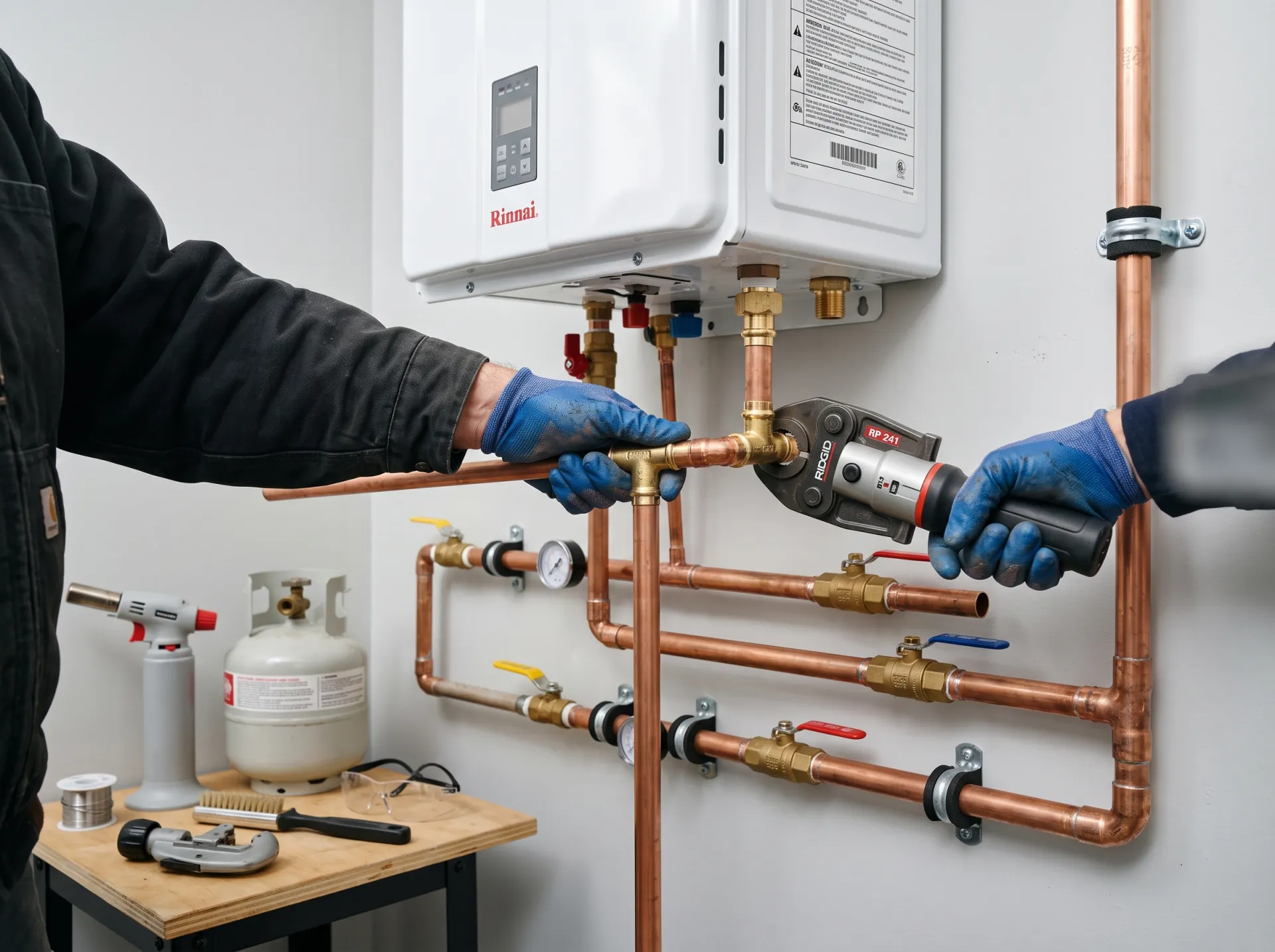
Whole-home repiping
Replacing all failing supply piping — commonly galvanized steel or polybutylene — with PEX or copper.
PEX repiping
Flexible cross-linked polyethylene, fewer joints, freeze-tolerant, and less invasive to install through existing walls.
Copper repiping
Type L copper where code, resale expectations or exposed runs call for it.
Main water line replacement
Replacing the service line from the meter to the building, trenched or trenchless.
Water line repair
Repairing a broken or leaking underground supply line without replacing the whole run where that is sound.
Polybutylene pipe replacement
Removing the grey polybutylene that fails at the fittings and is frequently uninsurable.
Galvanized pipe replacement
Replacing steel pipe that has corroded closed from the inside, which is the usual cause of collapsing pressure.
Water pressure diagnosis and regulators
Finding the actual cause of low or excessive pressure and replacing failed pressure-reducing valves.
Water main shut-off valve replacement
Replacing seized main and branch isolation valves so the system can be shut down safely.
Hose bibb and outdoor spigot replacement
Frost-free sillcocks and exterior valve replacement, including freeze-damaged units.
FAQ
Repiping & Water Lines: common questions
How long does a whole-home repipe take?
Most single-family homes are two to four days of plumbing work, plus drywall patching and paint afterwards. A good plumber opens the minimum number of access points needed and documents each one before closing.
PEX or copper?
PEX is faster to install, cheaper, tolerates freezing far better and has fewer joints to fail. Copper is rigid, handles UV and high heat, and some buyers still prefer to see it. For most residential repipes PEX is the better engineering answer; copper remains an option where you want it or code requires it.
Do I have to move out?
Usually not. Water is typically shut off during working hours and restored each evening. Ask the plumber up front whether any phase needs a longer shutdown.
How do I know it is the pipes and not just one fixture?
If pressure is poor at a single fixture it is that fixture — an aerator, cartridge or angle stop. If it is poor everywhere and got worse over years, it is the piping or the pressure regulator. That distinction is the first thing a plumber should test, and it is worth confirming before agreeing to a repipe.
Send a request
Request repiping & water lines
Describe the problem and your request goes to independent local plumbers, who contact you directly if they can help. They set their own prices, so ask for the price in writing before you agree to any work.
Something leaking, blocked or not heating?
Send one request describing the problem. Independent local plumbers can contact you directly with their availability and price, and you choose whether to hire any of them.
Requests accepted any time · Plumbers set their own prices and timing