How to repair a sewer line: Causes, methods, costs, and professional solutions
Pro US Plumbers ·
In this article
- Key Takeaways
- Understand the signs of a damaged sewer line
- Identify the cause and location of the problem
- Decide whether to repair or replace the sewer line
- Explore sewer line repair methods
- Prepare for the repair process
- Estimate sewer line repair costs
- Prevent future sewer line damage
- Further reading
- Conclusion
- Frequently Asked Questions
Key Takeaways
A damaged sewer line can begin with a small warning and become a major household disruption. Start with diagnosis, then compare the repair method, access requirements, cost, and urgency before authorizing work.
- Sewer odors, repeated backups, and several slow drains can point to a main sewer line problem.
- A camera inspection helps locate the defect before you choose a repair or replacement method.
- Spot repairs suit isolated damage, while widespread deterioration may require full replacement.
- Trenchless lining or bursting can reduce excavation when the pipe’s condition and layout allow it.
- Ask for licensing, timing, access needs, permits, and an itemized estimate before work begins.
Understand the signs of a damaged sewer line
Sewer problems rarely arrive with a convenient explanation. You may notice a foul smell, a drain that keeps slowing down, or wastewater appearing where it should not. Because several plumbing issues can look alike, you should treat recurring symptoms as a reason to investigate rather than guessing at the repair.
Common indoor and outdoor warning signs
Inside your home, watch for gurgling toilets, water rising in a shower when a nearby fixture drains, repeated backups, or damp areas around floor drains. Outdoors, unusually lush grass, soft ground, sinkholes, or standing water along the sewer route may deserve attention. A single symptom is not proof, but a pattern is harder to dismiss.
The EPA's overview of septic systems can help you understand why an isolated crack, failed joint, or localized root intrusion may call for a targeted fix rather than immediate full replacement. Even then, a professional should confirm the condition of the surrounding pipe.
How sewer odors point to drainage problems
A persistent sewage odor near a basement, crawl space, cleanout, or yard can indicate escaping sewer gas or wastewater. It may also come from a dry trap or a damaged vent, so smell alone cannot identify the buried defect. If the odor is strong, close to living areas, or paired with drainage trouble, arrange an inspection promptly and ventilate the space when practical.
Do not cover the smell with air freshener and assume the problem is solved. The odor is useful evidence, especially when it returns after fixtures are used or after heavy rain.
When slow drains indicate a main line issue
One slow sink often has a local obstruction. Several fixtures slowing down around the same time suggest that the restriction may be farther downstream, where multiple branch drains meet the main line. Toilets that gurgle while a washing machine drains are another clue that the system is struggling to move wastewater.
Before you repair sewer line damage, note which fixtures are affected, when the symptoms occur, and whether plunging or snaking provides only temporary relief. Those details help the plumber distinguish a recurring main-line issue from a simple household clog.
Distinguishing sewer line damage from plumbing clogs
A local clog usually affects one fixture and often responds to appropriate clearing. Sewer line damage is more likely when backups recur, multiple drains are involved, or wastewater returns through the lowest fixture. A professional may check cleanouts and use a camera rather than repeatedly treating the symptom.
If sewage has entered the home, keep people and pets away from contaminated areas and ask about cleanup before normal use resumes. Early diagnosis can limit damage to flooring, walls, landscaping, and the pipe itself.
Identify the cause and location of the problem
Finding the cause matters as much as identifying the symptom. A plumber needs to know whether the pipe is cracked, displaced, blocked, collapsed, or simply overwhelmed by roots. Location matters too: a defect beneath a lawn presents a different access problem from one beneath a driveway, foundation, or public easement.
Tree root intrusion and pipe displacement
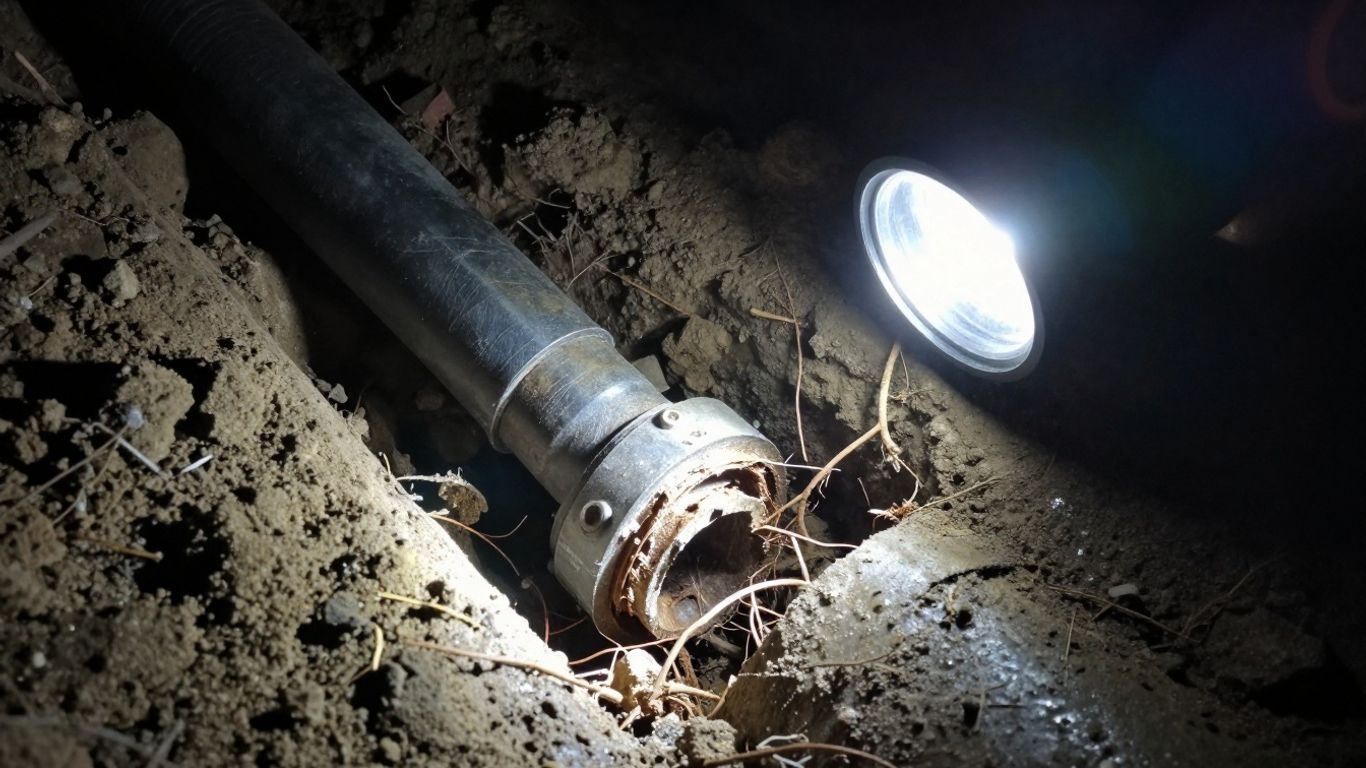
Tree roots can enter through joints or small openings and then hold debris in place as they grow. Older joints may shift, allowing soil and roots into the line. A pipe can also settle or move when surrounding ground changes, creating a low section where water and solids collect.
Removing roots may restore flow for a while, but it does not necessarily repair the opening that allowed them in. The inspection should show whether the pipe remains structurally sound and whether a localized repair, lining, or replacement is more sensible.
Corrosion, cracks, and collapsed pipes
Pipe material, age, soil conditions, and installation quality all affect how a sewer line fails. Corrosion can thin a pipe, cracks can leak into surrounding soil, and a collapsed section can stop flow altogether. A severely damaged line may also collect debris even after repeated cleaning.
You should ask for an explanation of the defect in plain language, supported by camera findings where available. A recommendation that does not connect the proposed work to the observed damage deserves a second look.
Ground movement, flooding, and excavation damage
Flooding can wash soil away or saturate the ground around a pipe. Freeze-thaw cycles, settlement, construction vibration, and accidental excavation can also displace or puncture a line. If the problem began after nearby digging, a storm, or visible ground movement, share that timing with the plumber.
The repair plan may need to account for unstable soil, groundwater, buried utilities, or a connection that crosses a property boundary. Those conditions can affect both the method and the schedule.
Using sewer camera inspections to locate defects
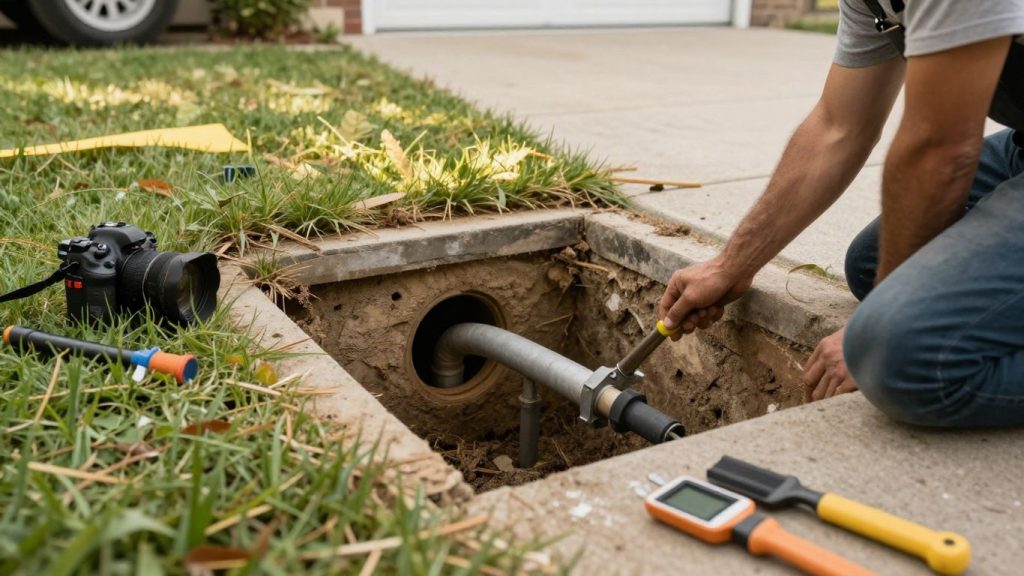
A camera inspection can show the inside of the pipe and help identify the distance to a blockage, intrusion, open joint, crack, or collapse. It is especially useful when symptoms recur but the source is not visible from a cleanout. Ask whether you will receive a recording or still images and whether the estimate identifies the inspected section.
The findings should guide the next decision, not simply add another service charge. For cost-planning context, this FTC consumer advice explains why location and access can change the final price.
Decide whether to repair or replace the sewer line
Repair versus replacement is not a choice you should make from the first symptom alone. The extent of damage, remaining pipe strength, access, material, and expected service life all matter. A clear recommendation should explain what is wrong, what the selected method fixes, and what risks remain elsewhere in the line.
When a spot repair is the right solution
A spot repair can make sense when one section has a crack, failed joint, or localized intrusion and the rest of the pipe is in reasonably good condition. It limits excavation and can be less disruptive than replacing the entire run. It is not a cure for widespread corrosion, multiple failures, or a line that is already collapsing.
Ask whether the inspection found other weak sections before approving a targeted repair. A lower initial price is useful only if it addresses the actual scope of the problem.
Situations that require full sewer line replacement
Replacement becomes more likely when damage appears in several locations, the pipe has lost its shape, or the material is deteriorating along much of the route. Repeated repairs can also become poor value when each new failure occurs in the same aging line. A plumber should distinguish an urgent replacement from an upgrade that can reasonably be planned.
You may still be able to choose between excavation and a trenchless method. The decision depends on the pipe’s alignment, diameter, access, connections, and surrounding structures.
Comparing traditional excavation with trenchless methods
Traditional excavation exposes the pipe directly, which can be useful for severe collapse, complicated connections, or a line that cannot accept a liner. Trenchless methods may reduce surface disruption, but they have conditions and limitations. The Better Business Bureau explains why camera inspection comes before lining and why a collapsed or badly misaligned pipe may need another approach.
Compare the complete scope rather than the headline price. Restoration, access, permits, cleanout work, and connection changes can affect the practical cost of either option.
How pipe material and age affect the decision
Older pipe does not automatically require replacement, but age can increase the chance of repeated defects and limit compatible repair methods. Material affects how the line responds to roots, corrosion, movement, and cleaning equipment. The plumber should identify the material when possible and explain how it influences the recommendation.
A useful decision weighs near-term affordability against the likelihood of another failure. It also considers your tolerance for excavation, household disruption, and future maintenance.
Explore sewer line repair methods
The best method follows the diagnosis rather than the other way around. Some repairs expose and replace a short section, while others create a new pipe within the existing route or replace the line without opening its full length. Your property layout and the pipe’s structural condition narrow the choices.
Excavation and sectional pipe replacement
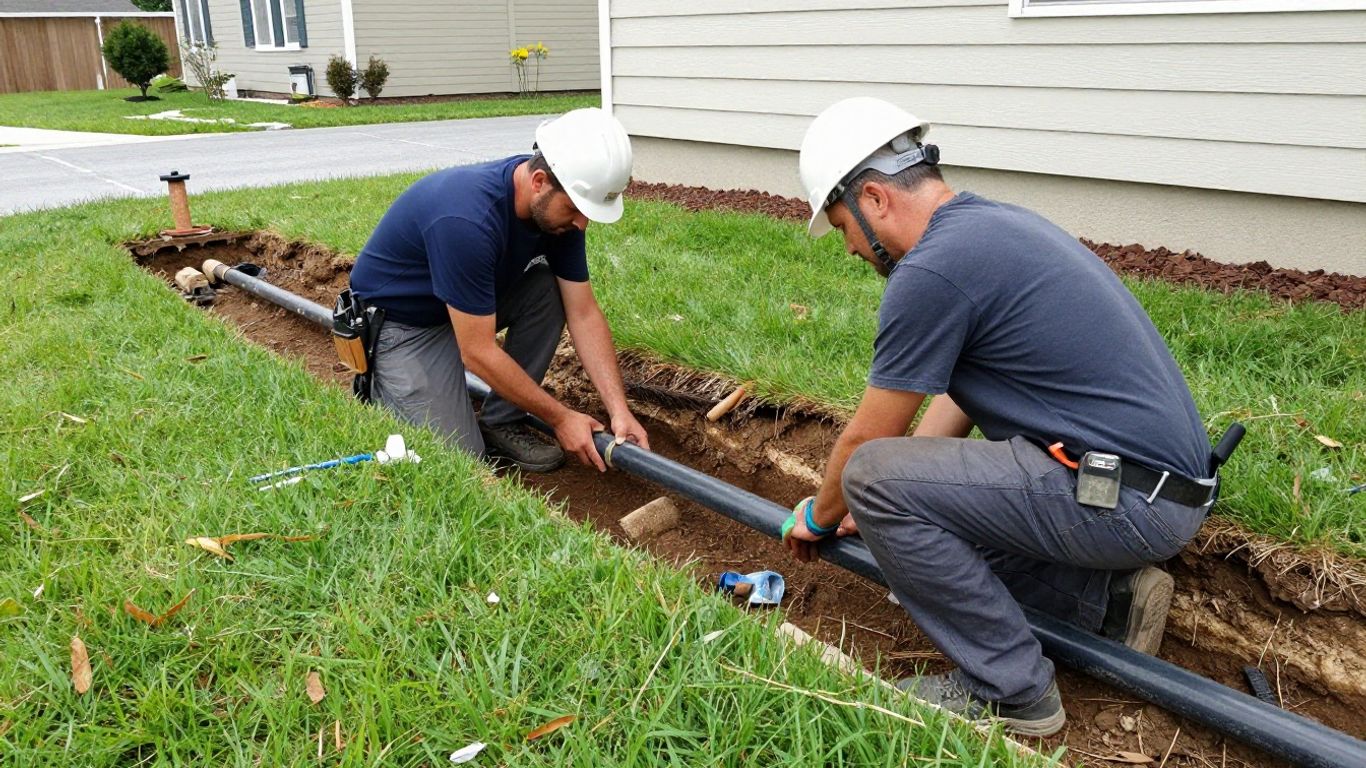
With excavation, workers open the ground to reach the damaged section, remove it, and install compatible pipe and connections. This approach provides direct access and can address a collapsed or badly displaced area. It may also require significant restoration afterward, especially beneath hardscape or mature landscaping.
Ask where excavation will occur, how deep it will be, and what the restoration plan includes. Direct access can be valuable when the pipe needs more than an internal repair.
Pipe lining for cracks and leaks
Pipe lining places a resin-treated liner inside a suitable existing pipe and cures it into a new inner surface. It can address certain cracks, leaks, and deteriorated sections while reducing the need to open the whole route. The existing pipe generally needs enough shape and clearance for the liner to pass through.
The process may require cleaning, camera inspection, and temporary interruption of service. Ask how side connections will be reopened and whether the liner is appropriate for the exact pipe condition.
Pipe bursting for severely damaged lines
Pipe bursting pulls a replacement pipe through the existing route while breaking the old pipe outward. It can be useful when the existing line is too damaged for lining but the route and access points permit the equipment. The method still requires careful planning around utilities, connections, depth, and property boundaries.
A bursting proposal should identify entry and exit pits, the replacement pipe, reconnection work, and surface restoration. It is not automatically suitable for every severely damaged line.
Root removal and temporary repair options
Mechanical root removal or cleaning can restore flow when roots are blocking an otherwise serviceable line. These measures may be appropriate as an interim response while you arrange a permanent repair, but they do not close the entry point. Chemical treatments should not be used casually; ask a professional whether they are safe and appropriate for your system.
Use a temporary measure as a bridge, not as proof that the pipe is sound. If symptoms return quickly, request a camera review and a durable plan.
Prepare for the repair process
Good preparation reduces surprises once the work starts. You will need to clarify who owns the affected section, what permissions are required, and how the crew will reach the pipe. A written scope also makes it easier to compare estimates and understand what happens if the original diagnosis changes.
Checking permits, utility lines, and property access
Ask who obtains permits and who contacts utility-locating services before excavation. Mark gates, irrigation controls, septic components, cleanouts, and areas where equipment cannot travel. If the line crosses an easement or approaches a public connection, the project may involve additional approvals.
Do not assume a plumber can dig immediately because the defect is urgent. Safe access and utility clearance protect both the crew and your property.
Coordinating with the plumber and local sewer authority
Confirm the arrival window, expected water-use restrictions, emergency contact, and payment schedule. If a public sewer main or shared lateral may be involved, ask whether the local sewer authority must inspect, approve, or coordinate the work. Keep copies of camera footage, permits, and the final invoice.
Pro US Plumbers connects homeowners with independent plumbers in their area. The plumbers you hear from are independent businesses, not employees or agents of ours, so confirm each one’s license and insurance yourself before you hire. When arranging help, you can also ask what price information is available before dispatch and how quickly a licensed plumber may be available.
Protecting landscaping, driveways, and structures
Before work begins, photograph nearby landscaping, hardscape, walls, fences, and interior finishes. Discuss equipment paths, spoil placement, dust control, and temporary coverings. If a driveway or patio must be opened, the written scope should say who handles restoration and what standard applies.
Moving fragile items and keeping children and pets away from the work zone can prevent avoidable accidents. A little documentation also helps distinguish pre-existing conditions from construction damage.
Planning for household disruption and cleanup
Ask when water, toilets, laundry, and drainage will be unavailable. You may need a temporary bathroom plan, access to another property, or arrangements for tenants. If a backup occurred, clarify whether cleaning and disinfection are included in the plumbing estimate or require a separate provider.
A repair is not finished when the pipe is installed. Confirm testing, backfill or surface restoration, debris removal, and the documents you will receive before closing out the job.
Estimate sewer line repair costs
The cost to repair sewer line damage depends on more than the pipe itself. Length, depth, access, soil, surface restoration, permits, connections, and the chosen method can all change the estimate. You should compare scopes and assumptions, not just the largest number or the lowest starting price.
Main factors that affect the total price
A short exposed repair is usually a different project from a deep replacement beneath a driveway. Camera inspection findings, excavation difficulty, pipe material, groundwater, traffic control, and disposal can all affect labor and equipment. Emergency timing may also change availability and scheduling.
Before work begins, ask whether the estimate includes diagnosis, labor, materials, permits, reconnections, testing, restoration, and cleanup. If any item is excluded, get that exclusion in writing.
Comparing repair, lining, and replacement costs
A targeted repair may cost less initially when the defect is isolated. Lining can reduce surface restoration in suitable pipes, while replacement may offer a more complete answer when the line is broadly deteriorated. The least expensive method is not always the least expensive decision over several years.
| Approach | Often suits | Cost variables | Main limitation |
|---|---|---|---|
| Spot repair | One localized defect | Depth, access, restoration | Does not correct distant damage |
| Pipe lining | Cracks or leaks in a usable route | Cleaning, connections, liner length | Needs suitable shape and clearance |
| Full replacement | Widespread deterioration or collapse | Length, excavation, surface repair | More disruption and restoration |
Use the table as a starting point, then ask the plumber to connect the recommendation to your camera findings. A written comparison is more useful than a generic “starting at” price.
Additional charges for permits and difficult access
Permit fees, utility locating, traffic control, pumping, groundwater management, and restoration may appear as separate line items. Tight crawl spaces, long equipment paths, deep trenches, and work under concrete can also increase labor. Shared lines or public connections may require coordination beyond the private property.
Ask which costs are fixed and which depend on conditions uncovered during excavation. That distinction helps you plan for a possible change order without treating every extra charge as a surprise.
Questions to ask for an accurate estimate
Before selecting a plumber, gather enough detail to compare proposals fairly. These questions usually expose important differences between bids:
- What defect did the inspection find, and where is it located?
- Which repair method are you recommending, and why is it suitable?
- Does the price include permits, reconnections, testing, cleanup, and restoration?
- What conditions could increase the price, and how will you approve extra work?
A transparent estimate should answer these questions without pressure. Pro US Plumbers is a referral service: it puts your request in front of independent plumbers who work nearby.
Prevent future sewer line damage
You cannot control every cause of sewer failure, but you can reduce avoidable stress on the system. Routine observation, sensible drain habits, and attention to landscaping help you catch problems before a backup becomes a cleanup project. Keep records of repairs so future inspections have useful history.
Scheduling inspections and routine maintenance
Schedule an inspection when you buy an older property, after repeated backups, or before major landscaping and construction near the sewer route. Have cleanouts located and kept accessible. Routine maintenance should address the actual pipe condition rather than rely on repeated chemical treatments or guesswork.
If your line has a known weakness, ask the plumber what symptoms justify an immediate call and what maintenance interval makes sense. The right schedule depends on the pipe and site.
Managing tree roots near sewer pipes
Avoid planting large-rooted trees directly over or beside a buried sewer route when planning new landscaping. Existing trees may require professional assessment rather than impulsive removal. Root cutting can restore flow temporarily, but recurring intrusion usually calls for a repair that closes the entry point.
Keep records of the pipe route, cleanouts, and any root treatment. That information can save time when a future plumber needs to locate the affected section.
What not to flush or pour down drains
Toilets and household drains should not be treated as disposal systems for materials that swell, harden, tangle, or accumulate. Grease and harsh substances can create problems in the building drain or farther along the line. Follow local disposal guidance for oils, chemicals, wipes, and medications.
Small habits matter because a sewer line carries everything from the home through a system that may already have age or structural wear. Use strainers where helpful and dispose of solid waste through the appropriate channel.
Recognizing early signs that require prompt service
Call for professional help when backups recur, several fixtures slow down, sewage odors persist, or water appears in an unexpected place. A prompt inspection may reveal a manageable defect before it becomes a collapsed section or contaminates the home. If wastewater is actively backing up, stop using fixtures that discharge into the affected line.
Pro US Plumbers can put your job in front of independent plumbers locally. Acting early gives you more choices and makes it easier to request a clear estimate.
Related articles
How to Choose the Right Septic Tank Maintenance Company for Reliable System Care and Hydro jetting drain field systems: Benefits, risks, and when it works cover other plumbing questions you may run into.
Further reading
For more background, see the International Code Council and the IAPMO, which publishes the Uniform Plumbing Code. It is also worth reading the InterNACHI and the American Society of Home Inspectors. You can find more detail from the EPA septic system care and maintenance.
If you would rather not sort this out alone, Drain cleaning and sewer services and independent local plumbers in your area can contact you directly.
Septic system services and Emergency plumbing (burst pipes, active leaks, sewage backups) may also be useful before you decide.
Leak detection and slab leak repair and Pricing guide: how plumbers charge and how to get a fair written quote may also be useful before you decide.
Request form: describe the problem so independent local plumbers can contact you and Where requests can be sent from: states and metros may also be useful before you decide.
About: how this referral service works may also be useful before you decide.
Conclusion
When you need to repair sewer line damage, begin with the evidence: document the symptoms, locate the defect, and understand the pipe’s overall condition. Then compare spot repair, lining, bursting, or replacement by total scope rather than headline price. A licensed professional who explains timing, access, permits, and costs before work begins can help you protect your home and make a calmer decision.
Frequently Asked Questions
How do I know if my sewer line is damaged?
Repeated backups, several slow drains, gurgling fixtures, persistent sewage odors, and unexplained wet or unusually green areas outdoors can indicate a sewer line issue. A professional inspection is needed to confirm the cause.
Can a sewer line be repaired without digging up the yard?
Sometimes. Pipe lining or pipe bursting may reduce excavation when the pipe, route, access points, and surrounding conditions are suitable. A camera inspection should come first.
Is a spot repair better than replacing the whole line?
A spot repair may be appropriate for one isolated defect in an otherwise sound line. If damage is widespread, the pipe is collapsed, or failures keep recurring, broader replacement may provide a more durable solution.
How long does sewer line repair take?
Timing varies with the method, pipe length, depth, access, permits, weather, and restoration work. Ask for an expected schedule and the events that could extend it.
What is the most expensive part of sewer line repair?
Excavation, difficult access, deep or unstable ground, long replacement runs, hardscape restoration, and complex reconnections can significantly affect the total. Request an itemized estimate that includes these factors.
Should I use chemical root killers in a sewer line?
Do not use them casually. Root treatments may not address structural openings and can be unsuitable for some systems or local conditions. Ask a qualified plumber about safer, appropriate options.
What should I ask before hiring a sewer repair plumber?
Ask about licensing and insurance, inspection findings, recommended method, permits, expected timing, included restoration, diagnostic or trip fees, change-order rules, and the total price or range before work begins.