In this article
- Key Takeaways
- Understanding hydro jetting for drain fields
- Signs your drain field may need professional attention
- How professionals evaluate the problem
- The hydro jetting process and equipment
- Benefits and limitations of drain field jetting
- Safety, costs, and long-term maintenance
- Further reading
- Conclusion
- Frequently Asked Questions
Key Takeaways
Hydro jetting can clear obstructions from septic and drain field piping, but it is not a cure for every absorption-area problem.
- Jetting cleans pipes; it does not restore saturated or failing soil.
- Slow drains, backups, odors, and wet grass deserve professional evaluation.
- A camera inspection can help distinguish a pipe blockage from broader system failure.
- Older, damaged, or fragile pipes may not tolerate high-pressure cleaning.
- Licensed service, clear pricing, and sensible maintenance reduce avoidable risk.
Understanding hydro jetting for drain fields
A hydro jetting drain field service uses pressurized water to clean accessible septic pipes and distribution lines. The goal is to break apart buildup and move it out of the line so wastewater can flow more freely. Whether it helps depends on where the restriction is and what condition the surrounding system is in. A pipe problem and a soil problem can look similar from the surface, but they require very different decisions.
What hydro jetting does in a septic system
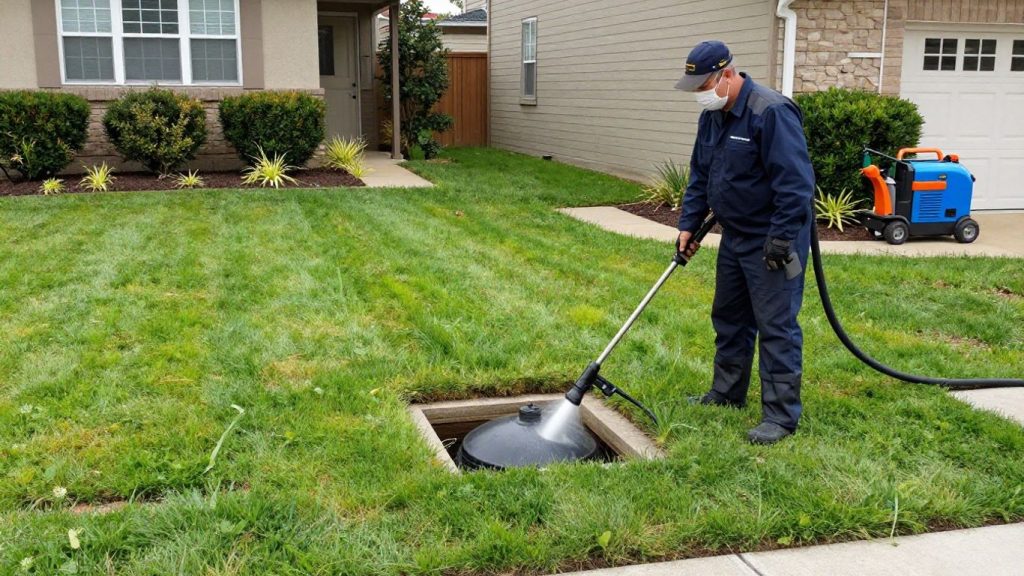
A technician feeds a flexible hose through an appropriate access point and uses a specialized nozzle to direct water against the inside of a pipe. The spray can loosen grease, sludge, sediment, mineral deposits, and some root intrusion. The loosened material must then be managed so it does not simply settle somewhere else in the system. For a helpful overview of the method, you can read this EPA septic system care and maintenance.
The service is therefore a targeted cleaning procedure, not a general septic-system reset. It may improve flow in an outlet or distribution line when the pipe itself is obstructed. It cannot, by itself, change the design, grade, or absorption capacity of the drain field.
How drain field blockages develop
Blockages can form when solids leave an overfull tank, grease accumulates, sediment settles, or roots enter a compromised line. In some systems, poor drainage habits and infrequent pumping allow more material to reach pipes that were meant to carry clarified effluent. Soil movement, age, and shifting connections can also create low spots where debris collects.
You may notice the problem first inside the home, but the origin can be farther downstream. A partial restriction may cause sluggish fixtures for weeks before a backup appears. That gradual pattern is one reason early assessment is usually less disruptive than waiting for wastewater to surface.
The difference between pipe cleaning and soil treatment
Jetting acts on the pipe interior. A drain field also depends on the soil beneath and around its trenches to receive and treat effluent, so a pipe can be clean while the soil remains saturated, compacted, or biologically overloaded. Cleaning the line does not remove a high groundwater condition or repair a failed distribution design.
This distinction keeps expectations realistic. If a technician finds a localized obstruction and healthy receiving conditions, cleaning may be reasonable. If the field cannot absorb the wastewater, more jetting may only move water toward the same underlying failure.
When hydro jetting is considered instead of replacement
Professionals may consider jetting when inspection shows a reachable blockage and the pipe appears structurally sound. It can be less invasive than excavating a large area, particularly when the restriction is in a distribution line rather than throughout the absorption field. The decision should follow inspection, not substitute for it.
Replacement becomes more likely when lines are collapsed, badly cracked, repeatedly invaded by roots, or connected to soil that no longer accepts effluent. A short-term improvement in flow is not a successful repair if the same failure is likely to return immediately.
Signs your drain field may need professional attention
Drain field trouble often announces itself through changes in household drainage or the appearance of the yard. None of those clues proves that a pipe is clogged, though, because tank, plumbing, groundwater, and soil conditions can produce similar symptoms. You should treat them as reasons to investigate rather than as a diagnosis.
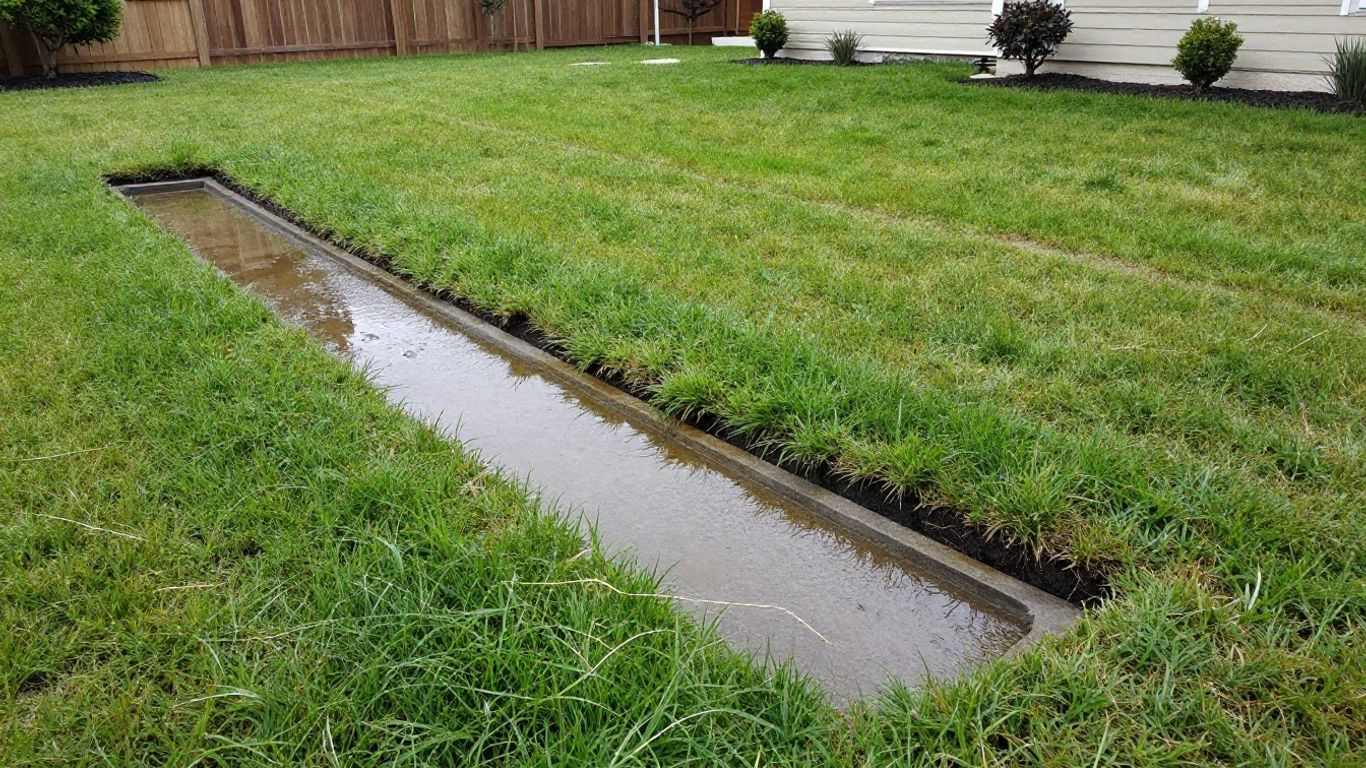
If the issue involves sewage, standing water, or repeated backups, limit contact with the affected area and arrange prompt service. These EPA's overview of septic systems can help you describe what you are seeing when you speak with a professional.
Slow drains and recurring septic backups
A partial restriction may make sinks, tubs, and toilets drain more slowly than usual. Gurgling, weak flushing, or wastewater returning through a low fixture can accompany the change. A single slow drain may be a household branch-line issue, while several affected fixtures point to a larger drainage concern.
Recurring backups deserve more attention than a one-time clog. If plunging or basic clearing only provides brief relief, the obstruction may be farther along the system, or the tank and field may be receiving more wastewater than they can handle.
Pooling water or unusually green grass
Wet patches over or near the absorption area can indicate that effluent is reaching the surface instead of moving into the soil as intended. A strip of unusually lush grass may also reflect extra moisture or nutrients. Weather, irrigation, grading, and broken water lines can create similar yard patterns, so location and timing matter.
Keep children and pets away from suspected wastewater. Do not cover a persistently wet area with soil or landscaping before the cause is understood; doing so can hide the evidence and make access harder for the technician.
Sewage odors near the absorption area
Persistent sewage odor around the tank, distribution area, or drain field suggests that wastewater or gases are not being contained and managed normally. The source might be a full tank, a damaged cover, a plumbing vent, or a field issue rather than a clogged line alone.
Odor is especially useful when you record when it occurs and whether it follows laundry, showers, rain, or heavy household use. That pattern gives the evaluator more to work with than a vague report that the yard smells bad.
Why symptoms alone cannot confirm a clogged drain field
Surface symptoms tell you that something needs attention, but they do not show the location or severity of the problem. A blocked effluent filter, a full tank, a broken pipe, poor grading, or seasonal groundwater can all change how the system behaves.
Avoid repeatedly adding drain chemicals or sending unusually large volumes of water through the system while you wait. A proper inspection can prevent you from paying to jet a line when the real repair belongs elsewhere.
How professionals evaluate the problem
Good jetting work starts with diagnosis. A technician needs to understand the tank level, the condition of filters and access points, the route of the lines, and the behavior of the receiving soil. The evaluation also helps determine whether pressure cleaning is appropriate or whether it could worsen a fragile system.
The process may be straightforward, but it should not be rushed. Pro US Plumbers connects homeowners with independent plumbers in their area. The plumbers you hear from are independent businesses, not employees or agents of ours, so confirm each one’s license and insurance yourself before you hire.
Inspecting the septic tank and effluent filter
The tank is checked for liquid level, sludge and scum accumulation, baffle condition, and visible signs of abnormal flow. If the effluent filter is loaded with solids, cleaning or replacing that filter may resolve the immediate restriction without jetting the field lines.
The technician may also confirm that covers are secure and that the outlet is operating as expected. These checks matter because a tank-side problem can mimic a drain field blockage and is often a simpler place to begin.
Using cameras to assess outlet and distribution lines
A camera can reveal standing water, heavy deposits, root intrusion, offsets, cracks, or a collapsed section when the line is accessible. It may also show whether a nozzle can travel through the pipe safely. The view is not always perfect, especially in older or heavily obstructed systems, but it can make the recommendation more specific.
Different findings lead to different responses, so the technician should explain what the camera can and cannot establish. A clear section of pipe does not prove that the soil is healthy, just as a blockage near the outlet does not automatically mean the whole field has failed.
Checking soil, slope, and drainage conditions
The evaluator considers the field’s slope, surface drainage, nearby downspouts, groundwater, soil texture, and signs of saturation. Water flowing onto the field from roofs or driveways can overload an otherwise serviceable area. Compacted soil and poor grading can also keep surface water from leaving.
A useful assessment connects the indoor symptoms to the outdoor conditions. The table below shows why the same complaint can point toward several different next steps.
| Finding | Possible concern | Typical evaluation focus |
|---|---|---|
| Slow drains throughout the home | Downstream restriction or tank issue | Tank level, filter, outlet, and line flow |
| Wet grass over the field | Saturation or surfacing effluent | Soil, groundwater, grading, and distribution |
| Water backing up after heavy use | Limited capacity or obstruction | Usage pattern, tank condition, and pipe inspection |
| Odor near an access point | Cover, vent, tank, or field concern | Seals, gas pathways, liquid level, and surface evidence |
The table is a starting framework, not a diagnosis. Your technician still needs to match the symptom with what is physically found on the property before recommending jetting.
Distinguishing a pipe obstruction from drain field failure
A pipe obstruction usually creates a defined restriction that can be located, accessed, and potentially cleared. Drain field failure is broader: the soil may remain saturated, the field may be undersized for current use, or the layout may no longer distribute effluent properly. Both conditions can produce slow drainage and wet ground.
Ask what evidence supports the proposed repair and what result would count as success. A responsible recommendation explains whether jetting is meant to restore flow temporarily, address a known obstruction, or avoidable excavation is genuinely on the table.
The hydro jetting process and equipment
Once the system has been evaluated, the technician chooses an access point, hose, nozzle, and pressure suitable for the pipe. The work is controlled rather than simply a matter of turning water up as high as possible. Access, pipe material, condition, and the location of the buildup all affect the approach.
You should receive a clear explanation of the work area, expected duration, wastewater handling, and price before service begins. That conversation is particularly valuable when the system is old or when the field has already shown signs of saturation.
Preparing the septic system for jetting
Preparation may include exposing or opening access points, checking the tank and filter, protecting nearby surfaces, and confirming where flushed material will go. The technician may also limit water use during the service so new flow does not interfere with the inspection or cleaning.
You can help by identifying recent backups, previous repairs, tank-pumping dates, and any known line routes. Those details reduce guesswork and help the technician avoid unnecessary excavation or pressure on an unknown section of pipe.
Choosing water pressure and nozzle types
Nozzles are selected for the material being removed and the geometry of the line. A rotating nozzle may address broad interior buildup, while a more focused configuration can help with a particular obstruction. Pressure must be matched to the pipe’s age, material, joints, and visible condition.
More force is not automatically better. A careful operator balances cleaning effectiveness against the possibility of loosening a weak connection, opening a crack, or driving debris into an inaccessible part of the system.
Flushing buildup from distribution lines
The hose is advanced through the line while water breaks apart and carries away deposits. The technician may work in stages, checking flow and adjusting the approach as the line clears. If the pipe remains blocked, the obstruction may be structural or located beyond the reach of the equipment.
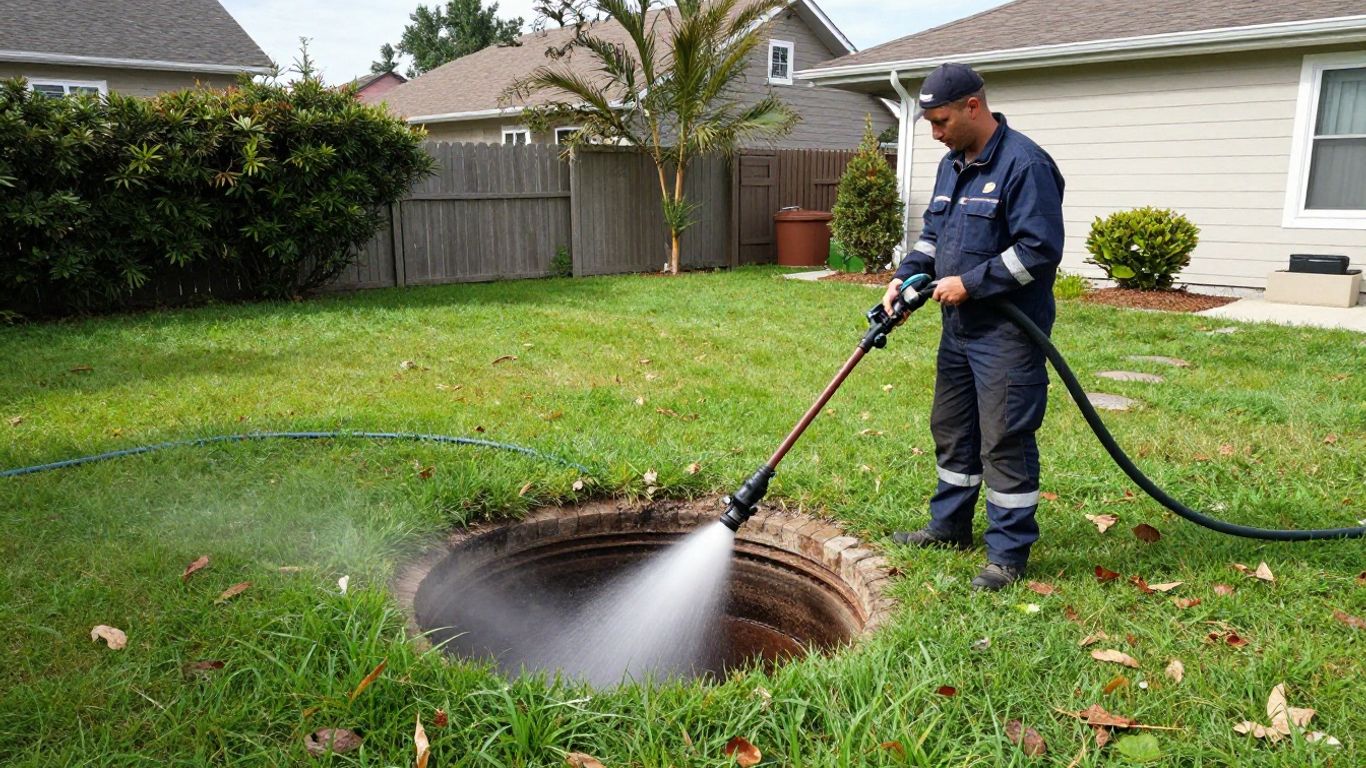
The result should be assessed rather than assumed. Improved flow is encouraging, but it does not prove that the soil can accept wastewater or that the line will remain open indefinitely.
Managing wastewater and preventing contamination
Jetting creates wastewater mixed with loosened debris, so it must be directed and contained responsibly. The work should prevent sewage from spreading across lawns, walkways, storm drains, or neighboring property. Protective practices also reduce exposure for occupants and workers.
You should ask where the flushed material will go and how the work area will be left. If the site is wet or the tank is open, keep people and pets away until the professional confirms that access points are secure.
A general hydro jetting demonstration can help you understand the equipment, but a video cannot determine whether your own drain field is suitable for the procedure. That decision depends on an on-site evaluation.
Benefits and limitations of drain field jetting
Jetting can be a practical way to address a reachable pipe obstruction without immediately excavating the field. It is most useful when the problem is clearly inside a serviceable line and the surrounding soil and system design remain functional. Its limits are just as important as its cleaning ability.
A realistic recommendation separates short-term flow improvement from long-term system performance. That distinction can spare you from repeating an attractive but unsuitable repair.
Removing grease, sludge, roots, and mineral deposits
Pressurized water can dislodge accumulated grease, sludge, sediment, mineral scale, and some root growth from pipe interiors. The actual result depends on the type of material, the amount of buildup, the pipe’s diameter, and whether roots have damaged the structure.
Cleaning is not the same as removing the condition that caused the buildup. If solids continue leaving an inadequately maintained tank, or roots continue entering through a damaged joint, the restriction may return.
Restoring flow without immediate excavation
When the obstruction is accessible and the pipe is intact, jetting may restore passage without opening a large area of lawn. That can reduce disruption and give you time to plan a more extensive repair if inspection shows that one will eventually be needed.
The benefit is strongest when the service addresses a defined blockage. If the field is already saturated, better movement through one line may simply transfer the problem to the soil or another section of the distribution network.
Situations where jetting may damage older pipes
Old clay, brittle, poorly joined, or previously damaged pipes deserve special caution. High-pressure water can expose weaknesses that were already present, separate a failing joint, or worsen a crack. Root-filled lines may also be structurally compromised rather than merely dirty.
Before work begins, ask whether the pipe material and condition have been identified. If the technician cannot safely access or evaluate the line, a lower-risk inspection or repair plan may be more appropriate than immediate jetting.
Why hydro jetting cannot repair saturated soil
Soil saturation is a capacity and drainage problem, not an interior pipe deposit. Jetting may clear a line that feeds the field, but it cannot restore pore space, lower groundwater, correct a poor slope, or redesign an undersized absorption area.
If the yard remains wet after a line is cleaned, that result should trigger further evaluation rather than repeated pressure treatments. The right remedy may involve drainage improvements, repairs to the distribution system, altered water use, or a permitted replacement plan.
Safety, costs, and long-term maintenance
The safest way to approach a hydro jetting drain field project is to treat it as specialized septic work, not an ordinary household drain clog. The equipment, wastewater, access openings, and possible contamination hazards require planning. You also deserve to know what is included before the work starts.
Pro US Plumbers is a referral service: it puts your request in front of independent plumbers who work nearby. That can be useful when you need fast help but still want to understand the likely scope rather than agree to an unexplained invoice.
Why licensed septic professionals should perform the work
A qualified professional can evaluate the whole system, select appropriate equipment, and recognize when pressure cleaning is unsafe. Septic work may also involve local requirements, excavation, wastewater handling, and groundwater protection that are easy to overlook during a do-it-yourself attempt.
Do not enter a tank or operate high-pressure equipment without the training and safeguards required for the work. The immediate goal is not merely to open a line; it is to solve the drainage issue without creating a larger one.
Factors that affect hydro jetting costs
Pricing varies with access, line length, obstruction severity, equipment needs, travel, tank condition, and whether inspection or pumping is included. A difficult access point or a buried distribution network can add labor even when the blockage itself is straightforward.
Before authorizing service, ask for the diagnostic or trip fee, the expected range, the work included, and the circumstances that could change the price. Pro US Plumbers can put your job in front of independent plumbers locally.
Protecting pipes, tanks, and groundwater during service
Protective work includes securing tank covers, using pressure appropriate to the pipe, keeping wastewater contained, and preventing discharge toward surface water or neighboring properties. The technician should also leave access points safe and explain any condition discovered during service.
You can support that process by keeping vehicles off the drain field, identifying private wells, and sharing information about buried utilities or prior repairs. If contamination is possible, follow the professional’s instructions for avoiding the affected area until it has been cleaned and assessed.
Practices that help prevent future drain field problems
Routine habits cannot fix a failed field, but they can reduce avoidable loading and make future problems easier to spot. Focus on the practices that protect both the tank and the distribution network:
- Have the septic tank inspected and pumped on a schedule suited to household use.
- Keep grease, harsh chemicals, wipes, and unsuitable solids out of drains.
- Spread laundry and other high-volume water use instead of sending it all at once.
- Keep roof runoff, sump discharge, and surface drainage away from the field.
- Respond to slow drains, odors, and wet spots before a major backup occurs.
These steps work best when paired with accurate records of pumping, repairs, inspections, and water-use changes. Early attention may not prevent every failure, but it gives you more options than waiting until sewage is standing in the yard.
Related articles
How to Choose the Right Septic Tank Maintenance Company for Reliable System Care and How to repair a sewer line: Causes, methods, costs, and professional solutions cover other plumbing questions you may run into.
Further reading
For more background, see the EPA SepticSmart and the EPA septic systems technical resources. It is also worth reading the EPA on well water contaminants and their impacts and the International Code Council. You can find more detail from the IAPMO, which publishes the Uniform Plumbing Code and the FTC consumer advice.
If you would rather not sort this out alone, Septic system services and independent local plumbers in your area can contact you directly.
Drain cleaning and sewer services and Sump pumps and well systems may also be useful before you decide.
Pricing guide: how plumbers charge and how to get a fair written quote and Request form: describe the problem so independent local plumbers can contact you may also be useful before you decide.
Where requests can be sent from: states and metros and About: how this referral service works may also be useful before you decide.
All plumbing service lines may also be useful before you decide.
Conclusion
Hydro jetting can be a useful, targeted way to clear an obstructed drain field pipe, especially when inspection confirms that the line is accessible and structurally sound. It cannot substitute for soil evaluation, tank maintenance, or a replacement plan when the absorption area has failed. By treating symptoms as clues, asking for evidence, and getting the price and process explained before work begins, you can make a more confident decision about the next step.
Frequently Asked Questions
Can hydro jetting clear a drain field blockage?
It can clear some blockages in accessible drain field or distribution piping when the pipe is suitable for pressure cleaning. A professional should first determine whether the restriction is actually in the pipe.
How do you know whether the drain field is clogged?
Slow drains, backups, odors, pooling water, and unusually green grass can be warning signs. They are not conclusive, so tank, filter, pipe, soil, and drainage conditions should be checked together.
Is hydro jetting safe for septic systems?
It can be safe when the equipment and pressure are matched to the pipe and the work is performed by a trained professional. Fragile, cracked, collapsed, or poorly joined lines may require another approach.
Can jetting fix saturated drain field soil?
No. Jetting cleans pipe interiors and cannot restore soil absorption, correct groundwater problems, or redesign an overloaded field.
How long does drain field jetting take?
The duration depends on access, line length, the obstruction, inspection needs, and wastewater handling. A technician can give a more useful estimate after seeing the system and its access points.
What does hydro jetting usually cost?
Cost varies by location, access, equipment, obstruction severity, and whether pumping or camera inspection is included. Ask about diagnostic fees, included work, and possible price changes before authorizing service.
What should you do if sewage is pooling near the drain field?
Keep people and pets away, reduce water use, and arrange a prompt septic evaluation. Do not assume that covering the area or repeatedly flushing the system will solve the cause.