How to Choose the Right Septic Tank Maintenance Company for Reliable System Care
Pro US Plumbers ·
In this article
- Key Takeaways
- Understand what septic tank maintenance includes
- Know when your septic system needs professional service
- Evaluate a septic tank maintenance company
- Compare services, pricing, and maintenance plans
- Prepare for a septic service appointment
- Protect your septic system between professional visits
- Further reading
- Conclusion
- Frequently Asked Questions
Key Takeaways
Choosing a septic tank maintenance company is easier when you know what the visit should cover and what questions to ask beforehand.
- Confirm that the company is properly licensed, insured, and familiar with local requirements.
- Compare written estimates that explain pumping, inspections, access, disposal, and possible extra charges.
- Schedule routine inspections and pumping instead of waiting for backups or drainfield problems.
- Keep records of tank access, service dates, sludge findings, repairs, and recommended follow-up.
- Protect the system by managing water use, household chemicals, landscaping, and heavy traffic near the drainfield.
Understand what septic tank maintenance includes
Septic maintenance is more than sending a truck to pump the tank. A complete visit may include inspecting the tank and its components, checking how wastewater moves through the system, cleaning filters, and documenting conditions for future reference. When you understand the scope, you can compare companies based on the work they actually perform rather than choosing only by the lowest advertised price.
The right service also depends on your system design, household size, property layout, and maintenance history. Ask the provider to explain what is included before work begins, especially if your tank or access ports are difficult to locate. A clear conversation at the start can prevent confusion when the appointment is complete.
Routine inspections and system evaluations
During an inspection, a technician should evaluate the tank, look for signs of leakage or structural damage, and review the condition of the liquid, scum, and sludge layers. The professional may also assess inlet and outlet components and note whether the system appears to be operating as expected. You should receive a practical explanation of findings, not just a recommendation to pump immediately.
The inspection interval is not identical for every property. Household size, wastewater volume, tank capacity, and the presence of pumps or other mechanical parts can all affect the schedule. The EPA septic system care and maintenance is a useful general reference, but your maintenance records and a local evaluation should guide decisions for your particular system.
Septic tank pumping and sludge removal
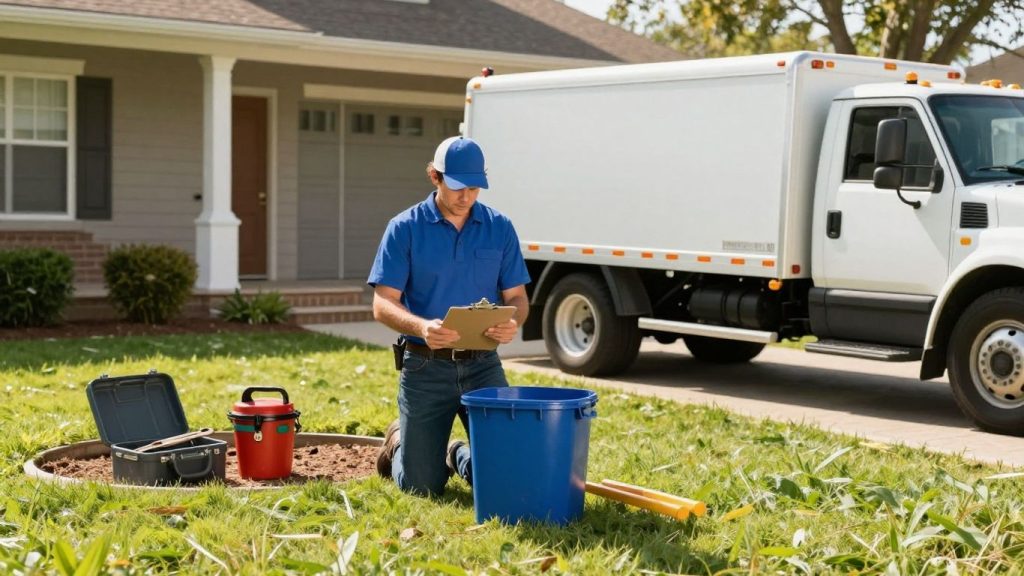
Pumping removes accumulated solids and scum so the tank has room to receive wastewater and settle material properly. A technician should identify the access point, open the tank safely, remove its contents with suitable equipment, and explain how the waste will be handled. Ask whether the estimate includes pumping, disposal, access work, and cleanup.
Pumping frequency varies, so avoid treating a calendar estimate as a guarantee. A larger household or smaller tank may need service sooner, while lower wastewater use may change the interval. The useful result of pumping is not simply an empty tank; it is a documented baseline that helps you plan the next inspection.
Drainfield and distribution system checks
The drainfield is the part of the system that receives treated liquid from the tank, so its condition deserves attention during maintenance. The technician may look for unusually wet ground, sewage odors, lush vegetation in a narrow area, surfacing effluent, or other signs that the system is not dispersing wastewater normally. Distribution boxes, pipes, pumps, and other components may also need review when they are part of your design.
Do not assume a tank that has been pumped is automatically healthy. A failing drainfield can remain troublesome even after the tank is serviced. Ask what the technician observed outside the tank and whether any recommended repair is based on a visible condition, a test, or a precaution.
Effluent filter cleaning and component servicing
Many septic systems include an effluent filter that helps keep solids from moving toward the drainfield. If your system has one, cleaning it can be a routine part of maintenance, although the exact task depends on the equipment installed. Pumps, alarms, floats, risers, baffles, and electrical components may also require inspection or servicing in an alternative or mechanically assisted system.
Have the company identify each component it touched and record any condition that needs monitoring. Written service notes matter because they give the next technician a clearer starting point and help you recognize a recurring issue. A maintenance record should be specific enough to show what was inspected, cleaned, repaired, or left unchanged.
Know when your septic system needs professional service
A septic system often gives warning signs before a major failure, but those signs can be easy to dismiss when drains still work. Slow fixtures, odors, wet areas, and unusual plant growth may point to a developing issue rather than an isolated plumbing nuisance. Prompt professional attention can help you distinguish a tank-related problem from a blockage or another household plumbing concern.
Routine care is still worthwhile when everything appears normal. Inspections reveal conditions that are hidden underground, and pumping based on measured accumulation is safer than waiting for wastewater to back up indoors. You can also review the EPA's overview of septic systems for another general perspective on inspections, pumping, troubleshooting, and repairs.
Warning signs of a developing problem
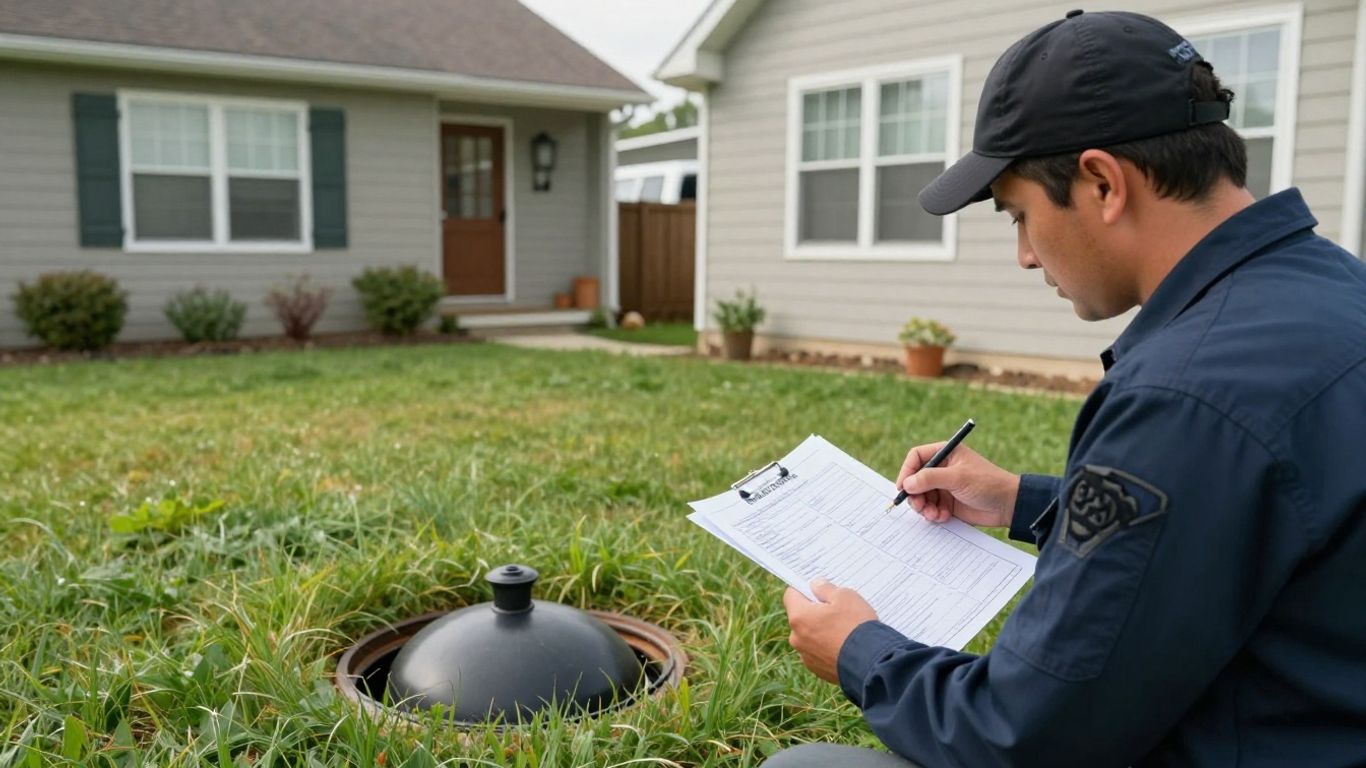
Pay attention when several fixtures drain slowly, toilets gurgle, or wastewater backs up into a shower or floor drain. Foul odors near the tank or drainfield, unusually wet soil, and sudden patches of bright green grass can also deserve an evaluation. These symptoms do not identify the exact cause on their own, but they are good reasons to call a qualified professional.
Keep children and pets away from sewage, standing wastewater, and areas where a tank lid may be damaged or unsecured. Avoid covering a wet area with soil or landscaping before it has been assessed. Concealing the symptom can make diagnosis harder and may allow contamination or structural damage to continue.
How often to schedule inspections and pumping
Many household systems are inspected about every three years and pumped roughly every three to five years, but those are broad starting points rather than universal rules. The appropriate interval depends on household size, tank size, wastewater volume, solids entering the system, and whether the system uses pumps or other mechanical components. Your technician should use observed conditions and prior records to refine the schedule.
A simple maintenance log makes that discussion more useful. Record the date, service performed, measured sludge or scum levels when provided, component concerns, and the recommended next visit. If you recently purchased the property and have no records, begin with an inspection so the schedule is based on current information.
Situations that require urgent attention
Some conditions should not wait for a convenient appointment. Sewage backing up into the home, surfacing near the drainfield, a strong persistent sewage odor, a failed pump alarm, or a damaged tank cover can create health and safety concerns. Call a qualified septic professional promptly and follow any local instructions about restricting water use or keeping people away from the area.
If the problem follows heavy rain, a power outage, or a plumbing event, mention that timing when you call. Those details may help the provider determine whether to send an emergency response or schedule a diagnostic visit. Do not enter a septic tank or attempt to lift a damaged cover yourself.
Why delaying maintenance can increase repair costs
When solids move beyond the tank, they can reduce the drainfield’s ability to accept wastewater. A small leak, failing pump, or blocked filter may also become more disruptive if it is ignored. Delaying service does not guarantee a costly failure, but it removes opportunities to identify manageable problems while they are still easier to address.
You can reduce uncertainty by asking what is urgent, what can be monitored, and what should be repaired soon. A responsible provider should separate observed defects from general recommendations and explain the consequences of waiting. That distinction helps you make a sound decision without approving work based only on fear.
Evaluate a septic tank maintenance company
The company you choose should be able to explain its process in plain language and show that it understands local septic requirements. Licensing, insurance, availability, and past customer experience all matter, but so does the quality of the estimate. You want a provider who tells you what will happen, when it can happen, and what you may owe before the work begins.
This is especially helpful when you are dealing with an active backup or an unfamiliar property. Pro US Plumbers connects homeowners with independent plumbers in their area. The plumbers you hear from are independent businesses, not employees or agents of ours, so confirm each one’s license and insurance yourself before you hire. It is still your responsibility to confirm that the selected provider performs the septic-specific work your system needs.
Licensing, certifications, and local experience
Ask which license or permit requirements apply to septic work in your state, county, or municipality, and ask the company to provide its current credentials. Local experience can matter because soil conditions, system designs, disposal rules, and inspection practices vary by area. A provider should be comfortable explaining how it handles those local requirements.
Experience should match the job, not just the general label of plumbing service. If you have an aerobic treatment unit, pump tank, advanced treatment equipment, or an older system, ask whether the technician regularly works with that type of installation. The answer should be specific rather than a vague assurance that every system is the same.
Insurance coverage and professional qualifications
Confirm that the company carries appropriate liability coverage and that its workers are trained for the equipment and conditions involved. Insurance does not guarantee quality, but it helps clarify how property damage or an accident would be handled. You can also ask whether subcontractors will be used and who is responsible for their work.
Before scheduling, request the company’s legal business name, license information where applicable, and a written description of the service. A provider that avoids basic questions about qualifications may create more uncertainty later. Keep copies of the estimate, credentials, and final invoice with your property records.
Service areas, availability, and emergency support
A company may advertise a wide service area but have limited availability in your community. Ask how soon a technician can arrive, whether emergency calls are handled after hours, and whether the quoted arrival time is an estimate or a guaranteed window. For a backup, honest timing is more useful than a vague promise that someone will call soon.
Pro US Plumbers is a referral service: it puts your request in front of independent plumbers who work nearby. For septic maintenance, verify the provider’s actual service area and septic capabilities before accepting the appointment. Availability should never be confused with expertise.
Customer reviews, references, and reputation
Reviews can reveal whether a company arrives when promised, communicates changes, explains charges, and leaves the work area in reasonable condition. Read several recent reviews rather than relying on a single rating. Look for comments about the same type of service you need, since pumping a conventional tank and troubleshooting a complex system are different assignments.
You can also request references for larger repairs or recurring service agreements. A reputable provider should be willing to describe its process and provide a written scope. Be cautious when reviews promise perfect results in every situation or when a company cannot explain who performed the work.
Compare services, pricing, and maintenance plans
Price matters, but a low quote can be misleading if it excludes access, disposal, difficult digging, filter cleaning, or diagnostic work. Compare estimates on scope and clarity, not just the total at the bottom. A good estimate gives you enough information to decide whether two companies are truly offering the same service.
Before calling, gather your address, approximate tank size if known, last service date, system type, and any symptoms. That information helps a provider give a more useful preliminary range. It also makes it easier to explain whether you need routine maintenance or urgent attention.

What a standard service estimate should include
A written estimate should identify the work proposed, expected timing, access assumptions, payment terms, and conditions that could change the price. If the provider cannot determine the full cost until the tank is exposed or inspected, the estimate should say so clearly. Ask how you will be contacted before additional work is performed.
Use a comparison like the one below to spot missing details before approving the appointment.
| Estimate detail | What to look for | Why it matters |
|---|---|---|
| Pumping scope | Tank size, pumping method, and disposal | Shows what the base price covers |
| Access work | Lid location, digging, risers, or extra labor | Prevents surprise access charges |
| Inspection tasks | Tank, filter, baffles, pump, and visible drainfield conditions | Clarifies what will actually be evaluated |
| Additional work | Approval process and separate pricing | Helps you control unplanned repairs |
After reviewing the estimate, ask the company to explain any line that is unclear. The goal is not to force an artificially exact price before the system is seen; it is to understand the assumptions behind the number and the process for handling changes.
Factors that affect septic maintenance costs
Costs may vary with tank size, location, accessibility, travel distance, disposal requirements, and the type of equipment installed. Digging to reach buried ports, pumping a large tank, cleaning an effluent filter, testing a pump, or responding after hours can all change the scope. Local regulations and disposal arrangements may also affect the final charge.
Ask whether there is a diagnostic, trip, emergency, or minimum-service fee. If a repair is suggested, request a separate written price when possible. A transparent provider should distinguish the cost of routine maintenance from the cost of correcting a defect discovered during the visit.
Benefits of recurring maintenance agreements
A recurring plan can make scheduling easier and reduce the chance that a busy season pushes your inspection past its intended date. It may also give the company a clearer history of your system, which can help technicians notice changes over time. These benefits depend on the actual agreement, so read the terms rather than assuming every plan includes the same services.
Ask whether the plan includes inspections, pumping, filter cleaning, priority scheduling, emergency support, or only appointment reminders. Confirm renewal terms and whether unused visits expire. A maintenance agreement should be convenient and understandable, not a reason to pay for services your system does not need.
Questions to ask before approving work
A short set of direct questions can expose gaps in an estimate and help you compare providers fairly. Ask them before the technician arrives if possible, or pause before approving additional work during the visit.
- What exact tasks are included in the quoted price?
- Are access, disposal, travel, diagnostic, or emergency fees separate?
- What license, insurance, and septic-specific experience does the provider have?
- What condition did the technician observe, and what evidence supports the recommendation?
- How will additional work be priced and approved?
The answers should leave you with a clear next step rather than a sales pitch. If the provider cannot explain the work, timing, or price in ordinary language, get another estimate before committing unless an immediate safety issue requires action.
Prepare for a septic service appointment
A little preparation helps the technician work safely and gives you a better record of the system’s condition. Gather whatever information you have, identify likely access points, and make the route from the street to the tank manageable. If an emergency is involved, tell the provider about backups, odors, alarms, recent rain, and any water restrictions already in place.
You do not need a perfect map or a complete history to schedule service. Even partial information, such as the date of a prior pump-out or the name of a previous company, can help. Be candid about what you do not know so the provider can plan for uncertainty.
Records and system information to provide
Share prior invoices, inspection reports, permits, property records, tank diagrams, and notes about repairs. Mention the number of people in the household, recent changes in occupancy, unusual water use, and any fixtures that are draining slowly. If the property has an alarm, pump, or alternative treatment equipment, include that information when requesting service.
These details help the technician interpret what they find. They can also prevent repeated work, such as searching for a tank location that was already documented in an old property file. Keep the final report with the earlier records after the appointment.
Locating access ports and system components
If you know where the tank, distribution box, cleanouts, pump chamber, or control panel is located, share that information before the visit. Do not dig deeply or open a cover unless you can do so safely and have been instructed by a qualified professional. Septic tanks can contain dangerous gases, and covers may be heavy, damaged, or unstable.
A provider may use property plans, probing methods, electronic locating equipment, or other techniques to find buried access. Ask whether locating is included in the estimate or priced separately. Installing risers later may make future inspections easier, but that work should be evaluated for your property rather than assumed to be necessary.
Clearing the work area for technicians
Move vehicles, toys, outdoor furniture, debris, and other obstacles from the expected access route. Keep pets indoors and tell household members where equipment will operate. If the yard is soft after rain, ask whether heavy trucks may damage the surface and whether a different access plan is possible.
Mark private features that may not be obvious, such as irrigation lines, invisible fencing, shallow utilities, or recent landscaping. Do not park over a tank or drainfield while waiting for the appointment. Clear access saves time and reduces the chance of avoidable property damage.
What homeowners should expect during the visit
A routine visit may involve locating and opening access, measuring or observing tank contents, pumping, cleaning a filter, checking visible components, and documenting recommendations. The technician may need to pause if access is unsafe or if the system requires a more detailed diagnostic evaluation. Ask for an explanation before approving work outside the original scope.
At the end, request the service date, work performed, observed conditions, materials or components used, and recommended next step. You should also know whether the system can be used normally or whether temporary water restrictions are advised. A clear closeout conversation is part of a useful maintenance visit.
Protect your septic system between professional visits
Professional maintenance works best when daily household practices do not overload the system. Septic care includes what you flush, how you use water, where you drive, and what you plant near underground components. Small habits are easier to maintain when every household member understands the reason behind them.
Use the maintenance report as a household reference, especially if you rent the property or have multiple occupants. Keep the tank location visible in your own records, even if the access lid is below grade. Good records and sensible use can help you notice changes before they become an emergency.
Water-use habits that reduce system strain
Spread laundry and other high-volume water use across the week instead of sending a large surge through the system at once. Repair dripping faucets and running toilets, and consider water-efficient fixtures where appropriate. Avoid treating a garbage disposal as harmless simply because it is connected to the kitchen drain; extra solids can increase the load entering the tank.
Pay attention to changes in household size or routine. Hosting guests for extended periods, adding a rental unit, or using a hot tub can change wastewater volume. If your water use changes substantially, ask your septic professional whether the inspection or pumping schedule should be revisited.
Household products and chemicals to avoid
Flush only human waste and toilet paper. Wipes, paper towels, feminine hygiene products, cotton products, medications, grease, and household trash can cause blockages or add solids that the system was not designed to handle. Pour cooking oil and grease into an appropriate container rather than sending them down a drain.
Use cleaning products and chemicals thoughtfully, and do not pour paints, solvents, fuels, pesticides, or harsh chemicals into sinks or toilets. Follow local disposal guidance for hazardous materials. You do not need to buy unrequested additives to maintain a healthy system; ask a qualified professional before relying on any treatment product.
Landscaping and drainfield protection
Keep vehicles, sheds, pools, patios, and heavy equipment away from the tank and drainfield unless a qualified professional confirms a suitable plan. Compaction can reduce the soil’s ability to accept wastewater and may damage buried pipes. Direct roof drains, sump pumps, and surface runoff away from the drainfield so it is not saturated by outside water.
Choose shallow-rooted plants suitable for the area and avoid placing trees or aggressive roots over system components. Do not irrigate the drainfield unnecessarily. If you notice standing water, odors, or unusually lush growth, limit contact with the area and arrange a professional evaluation.
Maintenance records and future scheduling
Write down each inspection, pump-out, filter cleaning, repair, component replacement, and recommendation. Include the company name, technician if available, invoice, tank measurements, and the date the next service is expected. A simple digital folder or paper file is enough as long as you can find it when needed.
Set a reminder before the recommended interval arrives, and update it when household conditions change. If you need help comparing local plumbing providers, EPA SepticSmart can offer another point of reference for questions about pump-outs, repairs, and proactive maintenance. Always confirm that the company serves your location and the specific system installed at your property.
Related articles
Hydro jetting drain field systems: Benefits, risks, and when it works and How to repair a sewer line: Causes, methods, costs, and professional solutions cover other plumbing questions you may run into.
Further reading
For more background, see the EPA septic systems technical resources and the EPA on well water contaminants and their impacts. It is also worth reading the FTC consumer advice and the Better Business Bureau. You can find more detail from the International Code Council.
If you would rather not sort this out alone, Septic system services and independent local plumbers in your area can contact you directly.
Drain cleaning and sewer services and Pricing guide: how plumbers charge and how to get a fair written quote may also be useful before you decide.
Request form: describe the problem so independent local plumbers can contact you and Where requests can be sent from: states and metros may also be useful before you decide.
About: how this referral service works and All plumbing service lines may also be useful before you decide.
Home: request a local plumber may also be useful before you decide.
Conclusion
The right septic tank maintenance company gives you a clear scope of work, honest timing, understandable pricing, and records you can use later. By checking qualifications, comparing complete estimates, preparing the property, and protecting the system between visits, you can replace last-minute decisions with a manageable maintenance routine.
Frequently Asked Questions
How do you choose a septic tank maintenance company?
Look for a properly licensed and insured provider with relevant local experience, clear estimates, documented service procedures, and reviews that relate to the work you need. Confirm the company’s service area and ask how it handles additional charges before scheduling.
How often should a septic tank be inspected?
Many household systems are inspected about every three years, while systems with pumps or other mechanical components may need more frequent attention. Your household size, system design, water use, and maintenance history should determine the final schedule.
How often does a septic tank need pumping?
A common broad range is every three to five years, but pumping needs vary with tank size, household size, wastewater volume, and solids accumulation. A professional inspection and service records provide a better basis than a calendar estimate alone.
What should a septic maintenance estimate include?
It should describe the work, access assumptions, pumping and disposal, inspection tasks, timing, payment terms, and the process for approving extra work. Ask specifically about travel, diagnostic, emergency, digging, and difficult-access fees.
What are signs that a septic system needs service?
Slow drains, gurgling fixtures, sewage odors, wet areas near the drainfield, unusually lush vegetation, alarms, and sewage backups can all justify professional attention. These signs do not identify the cause by themselves, so avoid guessing at a repair.
Can you use water normally after septic tank pumping?
Ask the technician before the visit ends. Some systems can return to normal use immediately, while a repair, saturated drainfield, pump issue, or other condition may require temporary limits. Follow the provider’s instructions and report any recurring symptoms.
What should you avoid flushing into a septic system?
Flush human waste and toilet paper only. Keep wipes, paper towels, grease, medications, chemicals, paints, solvents, and household trash out of the system, and dispose of hazardous materials according to local guidance.