Cost of repiping a house with PEX: 2026 pricing guide and cost breakdown
Pro US Plumbers ·
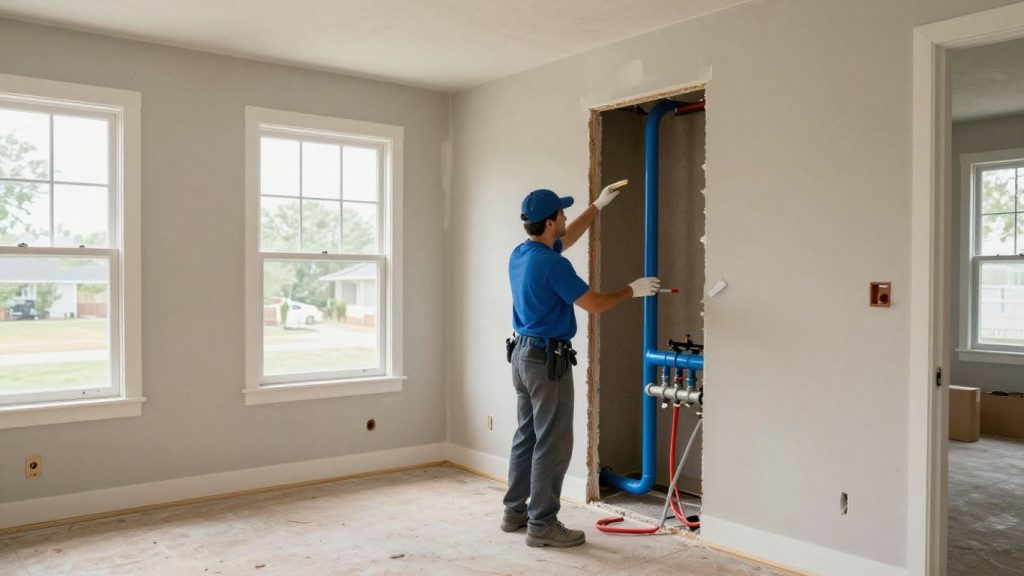
In this article
- Key Takeaways
- What it costs to repipe a house with PEX
- The main factors that change your repiping estimate
- What a PEX repiping quote usually includes
- How contractors calculate the cost of repiping a house
- PEX repiping costs by installation method
- PEX versus copper and other repiping options
- How to reduce the cost of repiping with PEX
- Further reading
- Conclusion
- Frequently Asked Questions
Key Takeaways
A PEX repipe can be a manageable planned project, but the final number depends on much more than the pipe itself.
- Whole-house PEX repiping commonly falls in the mid-thousands to low five figures, depending on access, layout, and region.
- Bathrooms, kitchens, fixture counts, and the home’s foundation can change labor time substantially.
- A complete quote should address materials, removal, testing, permits, and surface repairs.
- PEX often costs less to install than copper, but local code and project conditions still matter.
- Comparing detailed quotes is safer than choosing the lowest headline price.
What it costs to repipe a house with PEX
The cost of repiping a house with pex usually lands somewhere between $4,000 and $15,000 for a typical single-family home, although unusually large or difficult properties can exceed that range. A smaller home with accessible plumbing may come in near the lower end, while a multistory slab home with extensive wall repairs can move well above it. Treat these figures as planning ranges rather than a substitute for an inspection.
A useful Plastic Pipe Institute, for PEX and plastic piping standards can help you compare the visible quote with less obvious expenses such as permits, drywall work, and water-main changes. Your plumber should explain which of those items are included before work begins.
Typical whole-house PEX repiping ranges
For a modest one-story home with a crawl space, you might see an estimate around $4,000 to $8,000. A larger home, a multistory layout, or difficult access can push the project toward $8,000 to $15,000 or more. Emergency conditions, extensive demolition, and replacement of failing shut-off valves may add still more.
The range is broad because contractors price the work they can actually see: pipe routes, connection points, access openings, and restoration. Two houses with the same square footage can therefore receive very different estimates.
Cost per square foot and per fixture
Some contractors use square footage as a quick estimating tool, while others focus on fixture counts and linear feet of supply pipe. Rough planning figures may run about $2 to $10 per square foot, but that shorthand can be misleading when a home has unusual plumbing access or many bathrooms.
Per-fixture pricing can be more revealing for a partial repipe. Each sink, toilet, shower, tub, appliance, and hose connection adds a branch, fitting, or shut-off point. Ask whether the quote includes every fixture or only the main runs.
How home size affects the total price
A larger home generally requires more pipe, more connection points, and more time moving between work areas. It may also have more bathrooms and kitchens, which can matter more than floor area alone. A compact house with four bathrooms may cost more than a larger house with one.
Square footage also affects restoration. More rooms can mean more exploratory openings and more surfaces to patch after the new lines are routed. A realistic budget leaves room for that work instead of assuming the plumbing is the only cost.
PEX-A, PEX-B, and other material cost differences
PEX-A and PEX-B are manufacturing categories with different joining methods and handling characteristics. Material prices vary by brand, diameter, fitting system, and local supply, so the pipe label alone does not determine the project total. Your plumber should identify the proposed pipe and fitting system in writing.
PEX is flexible and can reduce the number of joints in some layouts, but fittings, manifolds, shut-off valves, insulation, and labor still make up a substantial part of the bill. The installation method matters at least as much as the price per roll of pipe.
The main factors that change your repiping estimate
A repiping estimate is shaped by the path from the water entry point to every fixture, not simply by the age of your existing pipe. Access, local labor, permits, and the condition of surrounding materials all affect how long the work takes. You can make quotes easier to compare by asking each contractor to price the same scope.
If you are still defining the project, a International Code Council can provide an early planning point, but an on-site review is still needed for walls, foundations, and code-related details.
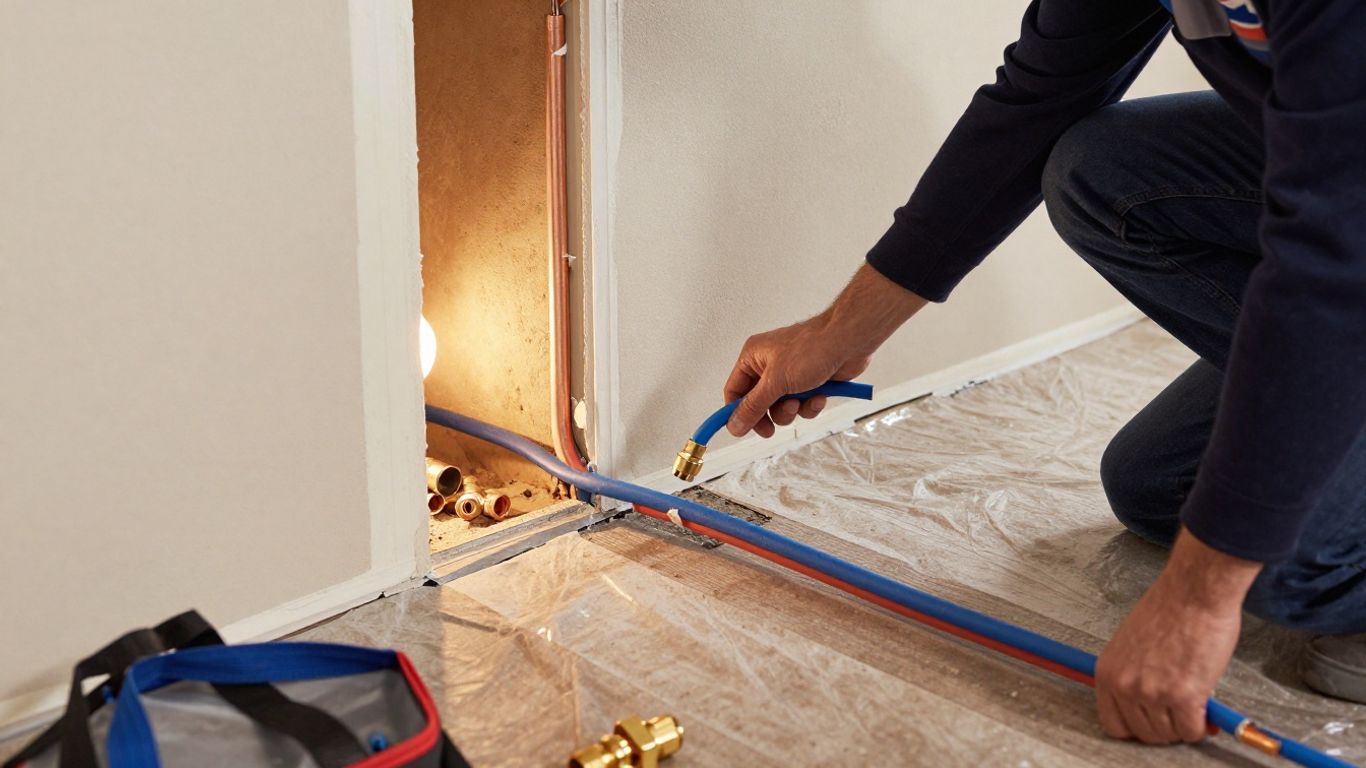
Number of bathrooms, kitchens, and water fixtures
Every fixture needs a reliable supply connection, and each branch adds material and labor. Multiple bathrooms may also require longer runs, more shut-off valves, and more testing. Kitchens can involve dishwashers, ice makers, and other connections beyond the sink.
Give the estimator a complete fixture count, including exterior hose bibs and utility-room appliances. Missing one connection from the original scope can create a change order later.
One-story versus multistory home layouts
A one-story home may offer simpler horizontal routes, especially when the crawl space or attic is accessible. In a multistory home, the plumber may need to work through stacked walls, chases, closets, or multiple ceiling areas. Longer vertical runs can increase both labor and repair work.
The best route is not always the shortest route. A slightly longer path through an accessible chase may cost less than opening a finished stairwell or tiled bathroom.
Access to walls, ceilings, crawl spaces, and attics
Open framing makes pipe replacement faster and usually reduces restoration. Finished walls, tile, cabinetry, and low crawl spaces do the opposite. The estimate should state who will create access openings and who will close them afterward.
Ask whether the quote assumes ordinary access or includes allowances for difficult spaces. This is one of the clearest reasons a phone estimate can differ from a written, site-specific proposal.
Local labor rates and permit requirements
Labor often represents more than half of a repiping bill. Rates vary by metro area, season, contractor availability, and the experience needed for a complex reroute. Permit fees and inspection requirements also differ by jurisdiction.
A licensed, insured plumber should be able to explain which permits apply and whether the contractor will arrange inspections. Pro US Plumbers connects homeowners with independent plumbers in their area. The plumbers you hear from are independent businesses, not employees or agents of ours, so confirm each one’s license and insurance yourself before you hire.
Water damage, mold, and other repair needs
Old leaks may have damaged insulation, framing, flooring, or cabinets before the repipe begins. Visible mold or soft wood may require separate remediation or carpentry, and those services may not be part of a plumbing quote. Ask for these conditions to be documented rather than hidden in a vague allowance.
Pro US Plumbers is a referral service: it puts your request in front of independent plumbers who work nearby.
What a PEX repiping quote usually includes
A quote is useful only when you can tell what work it covers. Some proposals include a complete turnkey project, while others price pipe installation and leave demolition or painting to you. Read the scope line by line before comparing totals.
The following items are worth looking for in a written estimate. If one is absent, ask whether it is excluded, included elsewhere, or billed separately.
Pipe, fittings, manifolds, and shut-off valves
The materials section should identify the pipe type and sizes, fitting system, manifolds if used, and the number and location of shut-off valves. It should also say whether the main shut-off and fixture stops are being replaced. These details affect both function and cost.
A low material allowance can make a quote look attractive while leaving necessary components outside the price. You want a complete system, not just a roll of tubing.
Removal and disposal of old plumbing
Some repipes abandon old supply lines in place, while others remove accessible sections. The proposal should describe which approach is planned and whether debris hauling is included. Removing old pipe can add time, especially in tight crawl spaces or finished ceilings.
If the old plumbing contains damaged or unusual materials, ask whether special handling changes the price. Clear disposal language avoids an awkward surprise at the end of the job.
Labor, testing, and system pressure checks
The quote should cover installation labor, connection work, fixture reconnection, flushing, and pressure testing. Testing helps reveal leaks before walls are closed. Ask how the contractor handles a failed test and whether corrective labor is included.
You should also know whether water service will be interrupted and how long the home may be without normal use. A schedule is part of a practical quote, particularly for a family or occupied rental.
Permits, inspections, and code compliance
Permits and inspections may be required for a whole-house water-line replacement. The estimate should identify who pulls the permit, who meets the inspector, and whether fees are included. Code requirements can influence valve placement, pipe supports, insulation, and access panels.
Do not assume that a contractor’s verbal statement covers every local requirement. Confirm the responsible party in writing before the first wall is opened.
Wall, ceiling, drywall, and paint repairs
Surface restoration is frequently the largest omitted item in a plumbing quote. Ask whether the contractor patches openings only or also matches texture, primes, paints, and replaces tile or cabinetry. Plumbing work can be complete while the room still needs substantial finishing.
If restoration is excluded, get a separate estimate before approving the repipe. Coordinating that work early can reduce duplicate trips and make the project easier to live through.
How contractors calculate the cost of repiping a house
A careful contractor starts with the home’s plumbing map and the access needed to reach it. The estimator then compares possible routes, counts materials and connection points, and adds labor for testing and restoration. This process explains why a detailed quote takes longer than a quick price over the phone.
You can make the visit more productive by gathering information about previous leaks, renovations, water-pressure problems, and any areas you do not want opened.
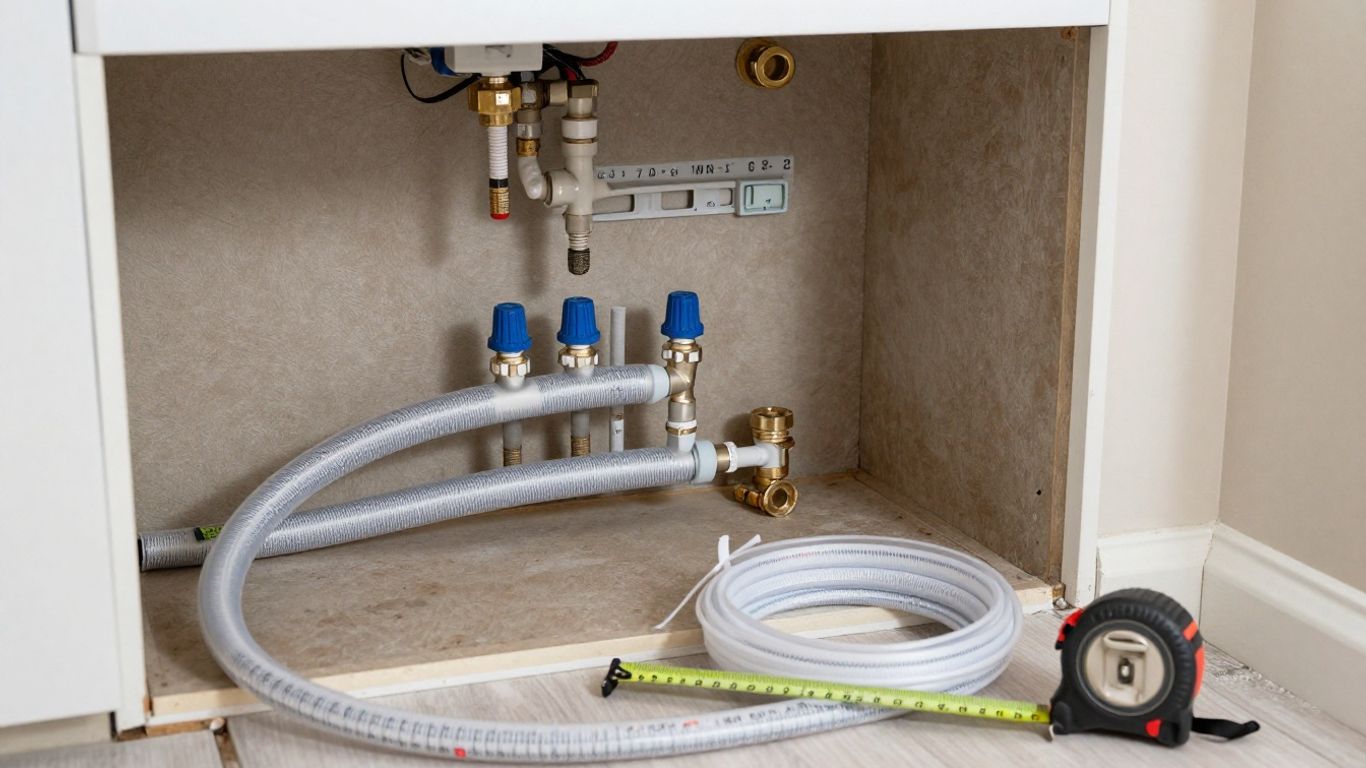
Creating a fixture and plumbing-access inventory
The estimator will usually count fixtures and note where supply lines enter walls, floors, ceilings, and cabinets. They may inspect the water heater, main shut-off, crawl space, attic, and accessible chases. Photos of recently remodeled rooms can help identify hidden obstacles.
Prepare a simple room-by-room list before the appointment. Include outdoor fixtures and appliances so the proposal reflects the full system rather than only the most obvious bathrooms.
Comparing rerouting options with direct replacement
Direct replacement follows the old route when that route remains accessible and practical. Rerouting may avoid a slab, finished tile, or a difficult chase by sending new PEX through an attic, wall cavity, or crawl space. The cheaper route depends on labor and restoration, not just pipe length.
Ask the contractor to explain at least one alternative when the first route requires major demolition. A longer accessible route can sometimes produce a lower overall price.
Estimating pipe length and connection points
Pipe diameter, distance, bends, supports, fittings, manifolds, and fixture stops all enter the estimate. The plumber may also allow for extra material at transitions and for pressure testing. These details are why two bids with similar fixture counts can still differ.
Review the number of connection points and the proposed layout, not only the total linear footage. Fewer hidden joints may simplify future troubleshooting, but the best arrangement depends on the home.
Identifying upgrades needed at the water main
A repipe can expose a weak main shut-off, undersized supply, corroded connection, or outdated pressure-control component. Replacing those parts may be sensible while the system is open, but it is a separate cost unless included in the scope.
Ask whether the water-main connection has been inspected and whether the quote includes an allowance for changes there. This is one of the additions most likely to affect a final invoice.
Reviewing the scope of work and warranty terms
Before signing, confirm the start date, expected duration, payment schedule, exclusions, restoration responsibilities, and warranty terms. A warranty should state what is covered, for how long, and whether fittings and labor receive the same coverage.
Pro US Plumbers can put your job in front of independent plumbers locally. That can help you begin the comparison, but the written contractor agreement remains the controlling document.
PEX repiping costs by installation method
Installation method often explains more of the price difference than the pipe material. A flexible PEX system may be routed in several ways, but each route creates different access and restoration demands. Your estimate should describe where the new lines will run.
The method also affects how disruptive the project feels. A slightly higher plumbing price may be worthwhile if it avoids extensive tile removal or keeps important rooms usable.
Open-wall installation for easier access
When walls are already open for remodeling or repair, plumbers can place lines, supports, and valves with fewer exploratory cuts. Labor is usually more predictable because the route is visible. You may still need framing repairs, insulation, drywall, and paint afterward.
If you are planning a bathroom or kitchen renovation, coordinate the repipe before finishes go in. Installing new lines behind freshly completed surfaces can create unnecessary cost.
Crawl-space and attic installation
Accessible crawl spaces and attics can provide efficient routes with limited interior demolition. The contractor still needs to consider insulation, pipe support, temperature exposure, moisture, and safe working conditions. Very low or cluttered crawl spaces can reduce the expected savings.
Ask how the new pipe will be protected and whether access panels will be installed. Good routing is about long-term serviceability as well as initial price.
Slab-home and concrete-access challenges
A slab foundation can make direct replacement expensive because supply lines may pass beneath concrete. Many contractors instead reroute through walls, ceilings, or the attic, which changes the pipe length and restoration scope. If concrete must be opened, cutting, removal, repair, and flooring work need to be priced separately.
Do not compare a slab-home estimate with a crawl-space estimate as though they were equivalent projects. The foundation changes the labor plan before materials are even selected.
Partial repiping versus whole-house replacement
A partial repipe may make sense when only one branch is failing and the remaining system is in good condition. It can cost less now, but old sections may continue to leak or restrict flow. A whole-house replacement offers a broader reset but requires more disruption and planning.
Ask the plumber to explain the expected condition and remaining life of the sections left in place. The cheapest immediate repair is not always the lowest long-term cost.
Manifold-based layouts versus trunk-and-branch systems
A manifold layout gives individual fixture lines a central distribution point, while a trunk-and-branch design uses larger shared runs with smaller branches. The right arrangement depends on the home’s structure, fixture placement, pressure needs, and access. Material and labor costs vary with the chosen design.
Your quote should show where manifolds or major branches will be located and how they will remain accessible. That information is more useful than a generic promise of a modern layout.
PEX versus copper and other repiping options
PEX is often considered because it is flexible, widely available, and typically less labor-intensive to install than copper. Copper remains a valid choice in some homes, particularly where local practice, design preference, or specific conditions favor it. Other legacy materials may need replacement because of age or known failure concerns.
Compare the complete installed system rather than the pipe price alone. Labor, fittings, access, restoration, water chemistry, and code requirements can change the result.
Upfront cost differences between PEX and copper
Copper generally costs more in material and installation labor, especially when the design requires extensive soldering and accessible working space. PEX may reduce cutting and joining time in some layouts. Neither material guarantees a particular total because the home’s access can dominate the estimate.
Request bids for comparable scopes. If one quote includes wall repair, permits, or a water-main upgrade and the other does not, the material comparison is not meaningful.
Durability, water quality, and expected service life
Both PEX and copper can provide long service when correctly selected and installed. Water chemistry, ultraviolet exposure, freezing, installation quality, and mechanical damage affect performance. Ask about manufacturer requirements and how the pipe will be protected in exposed areas.
If water taste, odor, or discoloration is part of your concern, have the underlying water and pipe condition assessed. A repipe may not solve every water-quality issue.
Freeze resistance and temperature limitations
PEX can tolerate some expansion when water freezes, but it is not freeze-proof. Proper insulation and protection remain necessary in vulnerable crawl spaces, attics, garages, and exterior walls. PEX also has temperature and pressure limits that must match the intended use.
Your plumber should explain how hot-water lines will be routed and supported. Do not assume flexibility removes the need for sound installation practices.
Insurance, resale, and local code considerations
Insurance requirements and underwriting practices vary by carrier and location. A permitted, documented repipe may be easier to explain during a sale, but resale value is not guaranteed. Local code may also limit materials, connections, or installation methods.
Keep permits, inspection records, invoices, product information, and warranty documents together. They can answer practical questions later without relying on memory.
When another plumbing material may be a better fit
Copper or another approved material may suit a particular exposure, design, repair method, or local requirement. The best choice depends on water conditions, temperature, access, budget, and the plumber’s proposed system. You do not need to choose material before understanding the route.
Ask for the reasoning behind the recommendation and whether an alternative was considered. A clear explanation is more valuable than a broad claim that one material is always best.
How to reduce the cost of repiping with PEX
Cost control starts before demolition. You can reduce surprises by comparing equivalent scopes, coordinating other work, and deciding who handles restoration. Speed matters when a leak is active, but even an urgent job deserves clear communication about price and timing.
Pro US Plumbers only makes the introduction; the price, timing and the work itself are agreed directly with the plumber you choose. Whether you use a directory or contact contractors directly, insist on a written scope before non-emergency work begins.
Getting comparable quotes from licensed plumbers
Request two or three written estimates when your situation allows it. Give each plumber the same fixture list and ask each to identify pipe type, access assumptions, permits, testing, removal, and repairs. A quote with a higher total may include work another contractor left out.
Check licensing and insurance, then ask who will actually perform the installation. A reliable comparison is based on credentials and scope, not just the first number you see.
Bundling drywall and remodeling work
If walls or ceilings already need to be opened, combine plumbing access with planned remodeling where possible. The same contractor or coordinated team may be able to reduce repeated demolition and finishing visits. Make sure the plumbing schedule comes before cabinets, tile, and paint.
Get restoration responsibilities in writing. Bundling saves money only when the trades are coordinated rather than simply added to the same invoice.
Choosing the right pipe layout and access points
The lowest material quantity is not automatically the lowest project cost. A route that uses an accessible attic, chase, or crawl space may reduce demolition and future service time. Install access panels where valves or manifolds may need attention.
Discuss the trade-off between a short route and an easy-to-repair route. A thoughtful layout can protect both your immediate budget and your finished surfaces.
Planning permits and inspections before work begins
Ask the local building department or contractor about permits before scheduling demolition. Delays can increase labor and leave walls open longer than expected. Inspection timing should be included in the project schedule.
Reserve money for required fees and corrections. Planning these steps early is less expensive than discovering a code issue after the work is covered.
Avoiding low bids that exclude essential repairs
A low bid may omit drywall, paint, disposal, permits, fixture reconnection, or water-main work. Compare exclusions as carefully as inclusions. You should know the likely price if the contractor finds a damaged fitting or inaccessible route.
A written change-order process provides a practical safeguard. When the scope changes, you want the reason, added cost, and approval recorded before extra work proceeds.
Related articles
Under slab leak detection: How to find, confirm, and address leaks beneath concrete and Plumbing inspection checklist: A step-by-step guide for homeowners and property managers cover other plumbing questions you may run into.
Further reading
For more background, see the IAPMO, which publishes the Uniform Plumbing Code and the InterNACHI. It is also worth reading the American Society of Home Inspectors and the EPA on reducing lead exposure at home. You can find more detail from the FTC consumer advice and the Better Business Bureau.
If you would rather not sort this out alone, Repiping and water line services and independent local plumbers in your area can contact you directly.
Leak detection and slab leak repair and Water heater repair and installation may also be useful before you decide.
Pricing guide: how plumbers charge and how to get a fair written quote and Request form: describe the problem so independent local plumbers can contact you may also be useful before you decide.
Where requests can be sent from: states and metros and About: how this referral service works may also be useful before you decide.
All plumbing service lines may also be useful before you decide.
Conclusion
The cost of repiping a house with pex depends on home size, fixture count, access, foundation, labor, permits, and restoration as much as on the pipe itself. Build your budget around a detailed scope, compare licensed plumbers on equal terms, and ask direct questions about exclusions before work starts. That approach gives you a clearer price and a smoother project.
Frequently Asked Questions
How much does it cost to repipe a house with PEX?
Many whole-house projects fall between $4,000 and $15,000, but the actual price depends on size, access, location, fixture count, foundation, permits, and repair work.
Is PEX cheaper than copper for a whole-house repipe?
PEX is often less expensive to install than copper because it can require fewer labor-intensive connections, but the final difference depends on the layout and the scope included in each quote.
Does a PEX repipe include drywall repair?
Not always. Some contractors include basic patching, while others exclude drywall, paint, tile, cabinetry, and flooring repairs. Confirm restoration terms in writing.
Can you repipe a house without removing all the walls?
Often, yes. Plumbers may use crawl spaces, attics, chases, closets, or rerouted lines to limit demolition. The available route depends on the home’s design and foundation.
How long does a whole-house PEX repipe take?
A straightforward project may take several days, while a larger or difficult home can take longer. Access, inspections, demolition, restoration, and the number of fixtures all affect the schedule.
Should old plumbing be removed during a repipe?
Some old lines can be abandoned in place, while accessible sections may be removed. The correct approach depends on the material, location, condition, disposal requirements, and project scope.
What should you ask before accepting a repiping quote?
Ask about pipe and fittings, fixture coverage, access assumptions, permits, testing, removal, restoration, schedule, payment terms, change orders, and warranty coverage.