Service
Water Filtration & Softeners
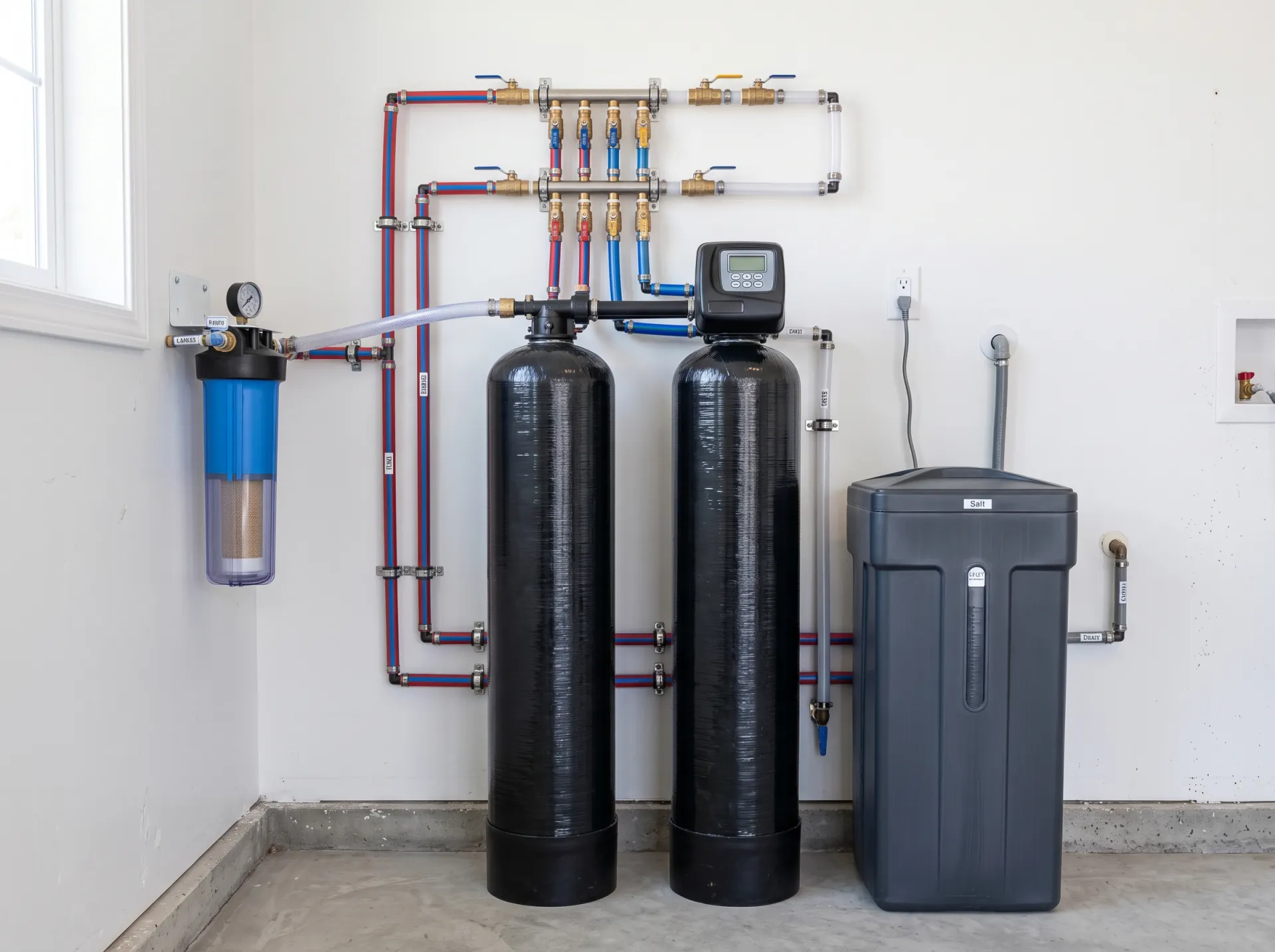
Water softeners, whole-house filtration, reverse osmosis and iron or sulphur removal — specified from a water test rather than from whatever the installer has in the truck.
Common signs
Signs you need water treatment
- White scale on faucets, shower doors and kettles
- Soap that will not lather and stiff laundry
- Orange or brown staining in sinks and toilets
- A rotten-egg smell from the hot water
- Blue-green staining around drains
- Water heaters and appliances failing early
Typical jobs
11 kinds of work under water treatment
Water testing and analysis
Hardness, iron, pH, chlorine, TDS and bacteria testing to establish what treatment is actually needed.
Water softener installation
Correctly sized ion-exchange softeners with bypass valves and drain connections to code.
Water softener repair and service
Resin replacement, valve rebuilds, brine tank cleaning and control head repair.
Salt-free conditioner installation
Template-assisted crystallisation systems for scale control where salt discharge is restricted.
Whole-house filtration
Sediment, carbon and specialty media systems installed at the point of entry.
Reverse osmosis systems
Under-sink and whole-house RO for drinking water, including tank and faucet installation.
Iron and manganese removal
Oxidising filters for well water that stains fixtures and laundry.
Sulphur and odour removal
Treatment for the rotten-egg smell that carbon alone will not fix.
UV disinfection systems
Ultraviolet sterilisation for private wells and non-chlorinated supplies.
Acid neutralisers
pH correction for acidic water that pits copper pipe and causes blue-green staining.
Filter and cartridge replacement
Scheduled media and cartridge changes that keep a system working rather than restricting flow.
FAQ
Water Treatment: common questions
Do I need a softener or a filter?
They solve different problems. A softener removes the calcium and magnesium that cause scale. A filter removes sediment, chlorine, iron, or contaminants. Many homes need both, some need neither, and the only way to know is a water test — which is why testing should come before any quote.
Is softened water safe to drink?
Yes for the overwhelming majority of people. Ion exchange adds a small amount of sodium proportional to the original hardness. If you are on a strictly sodium-restricted diet, ask about a potassium chloride system or leaving the kitchen cold tap unsoftened.
How often does a softener need servicing?
Salt gets topped up every one to two months depending on use. The resin bed typically lasts 10 to 15 years, and the control valve benefits from a service every few years. Well water with iron shortens all of those intervals.
Will treatment fix my existing stained fixtures?
No — treatment stops new staining. Existing stains need cleaning or replacement. Anyone who tells you a softener will clear existing rust stains is selling rather than advising.
Send a request
Request water treatment
Describe the problem and your request goes to independent local plumbers, who contact you directly if they can help. They set their own prices, so ask for the price in writing before you agree to any work.
Something leaking, blocked or not heating?
Send one request describing the problem. Independent local plumbers can contact you directly with their availability and price, and you choose whether to hire any of them.
Requests accepted any time · Plumbers set their own prices and timing